Europe Onboard Chargers (OBC) Market to Reach USD 6.96 Billion by 2033, Driven by EV Production Growth, 800V Vehicle Architectures, and Silicon Carbide Power Electronics
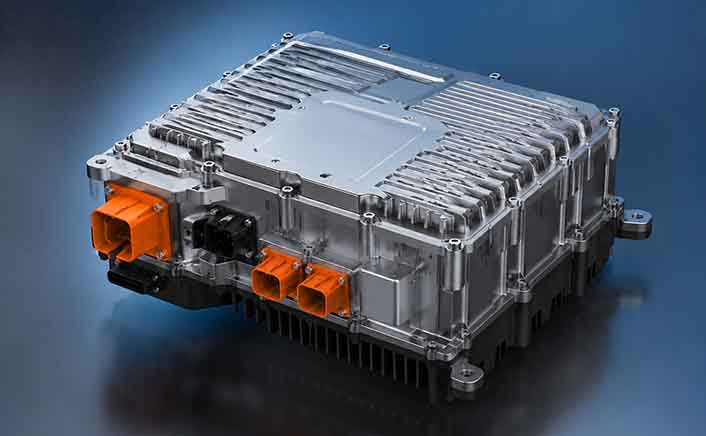
The Europe Onboard Chargers (OBC) Market is projected to grow from USD 2.84 billion in 2025 to USD 6.96 billion by 2033, registering a CAGR of 11.8% during the forecast period. Market growth is being driven by rising electric vehicle production, increasing adoption of battery electric vehicles, expansion of charging infrastructure, and accelerating deployment of advanced power electronics technologies across the European automotive industry.
Onboard chargers are essential power electronics systems integrated into electric vehicles that convert alternating current (AC) from the grid into direct current (DC) required for battery charging. As every battery electric vehicle (BEV) and plug-in hybrid electric vehicle (PHEV) requires an onboard charger, demand for these systems is directly linked to electric vehicle production and adoption. Growing consumer acceptance of EVs, increasingly stringent emissions regulations, and substantial investments in vehicle electrification are positioning onboard chargers as a critical component of Europe's automotive transition.
Europe remains one of the world's most advanced electric vehicle markets, supported by ambitious decarbonization targets and strong regulatory backing. According to the European Automobile Manufacturers’ Association (ACEA), battery electric vehicles accounted for 17.4% of all new passenger vehicle registrations in the European Union during 2025. Germany, France, the United Kingdom, the Netherlands, and Norway continue to serve as major demand centers for electric vehicles, creating significant opportunities for onboard charger manufacturers and automotive power electronics suppliers.
The market is experiencing a major technological transformation as automotive manufacturers transition from conventional charging architectures toward more advanced and efficient systems. The 11 kW onboard charger has become the standard configuration across many new passenger EV platforms due to its balance between charging performance and cost efficiency. At the same time, adoption of 22 kW systems is increasing in premium vehicles and commercial electric fleets where faster charging capabilities are becoming a competitive requirement.
One of the most significant developments shaping the industry is the growing adoption of silicon carbide (SiC) semiconductors in onboard charger designs. Compared with conventional silicon-based technologies, SiC power electronics offer higher efficiency, reduced energy losses, improved thermal performance, and greater compatibility with next-generation vehicle architectures. As a result, leading automotive manufacturers and suppliers are increasingly integrating silicon carbide technologies into their electrification roadmaps to improve vehicle performance and charging efficiency.
The transition toward 800V electric vehicle architectures is also creating new growth opportunities for the onboard charger market. Vehicles such as the Porsche Taycan, Audi e-tron GT, Hyundai IONIQ 5, Kia EV6, and several upcoming premium EV platforms use higher-voltage electrical systems to reduce charging times and improve overall energy efficiency significantly. These architectures require advanced onboard charging solutions capable of supporting higher power levels and more sophisticated thermal management capabilities.
Electric vehicle production remains the most important market driver. European automotive manufacturers continue to expand EV manufacturing capacity through investments in dedicated electric platforms and battery production facilities. Volkswagen Group, BMW Group, Mercedes-Benz Group, Stellantis, Renault Group, Volvo Cars, and several emerging EV manufacturers are accelerating electrification strategies to comply with future emissions regulations and respond to evolving consumer preferences. As EV production volumes increase, demand for onboard chargers is expected to grow in parallel across both passenger and commercial vehicle segments.
In volume terms, the European onboard chargers market recorded shipments of 3.18 million units in 2025 and is forecast to reach 6.72 million units by 2033. Volume growth is expected to be supported by both increasing electric vehicle production and ongoing upgrades toward higher-capacity charging systems. Commercial vehicle electrification is also emerging as a significant driver of future demand, particularly as logistics operators, public transportation agencies, and fleet owners accelerate their decarbonization initiatives.
The expansion of charging infrastructure across Europe is further supporting market development. According to the International Energy Agency (IEA), Europe surpassed one million public charging points in 2024, reflecting continued investments in EV ecosystem development. Improved charging accessibility is helping to reduce range anxiety among consumers and strengthening the business case for broader electric vehicle adoption, thereby indirectly supporting demand for onboard chargers.
Technological innovation is increasingly influencing competitive dynamics across the market. Manufacturers are developing integrated power electronics platforms that combine onboard chargers, DC-DC converters, and power distribution systems into a single, compact unit. These integrated architectures help reduce component count, lower vehicle weight, improve energy efficiency, and simplify manufacturing processes. In addition, bidirectional charging technologies capable of supporting vehicle-to-grid (V2G) and vehicle-to-home (V2H) applications are attracting growing attention as energy management and grid stabilization become strategic priorities across Europe.
Despite strong growth prospects, the market faces challenges including cost pressures, semiconductor supply chain dependencies, and the complexity of developing advanced charging systems across diverse vehicle architectures. However, ongoing investments in European semiconductor manufacturing, battery production facilities, and automotive electronics supply chains are expected to strengthen regional competitiveness and support long-term market expansion.
Leading companies operating in the European onboard chargers market include BorgWarner, Valeo, Delta Electronics, Marelli, STMicroelectronics, Ficosa, Infineon Technologies, and Wolfspeed. Market participants are focusing on silicon carbide adoption, the development of integrated power electronics, software-enabled charging functionality, and strategic partnerships with automotive OEMs to strengthen their competitive positioning.
The European onboard chargers market is expected to maintain strong growth momentum through 2033 as electric vehicle production expands, charging technologies advance, and automotive manufacturers accelerate deployment of next-generation electrification platforms. The convergence of high-voltage vehicle architectures, silicon carbide power electronics, bidirectional charging capabilities, and large-scale transportation electrification is expected to create sustained opportunities for suppliers throughout the European EV value chain.