Europe Metal Working Equipment Market Future Forecast Supported By Increasing Investments In Research Development And Production Upgrades.
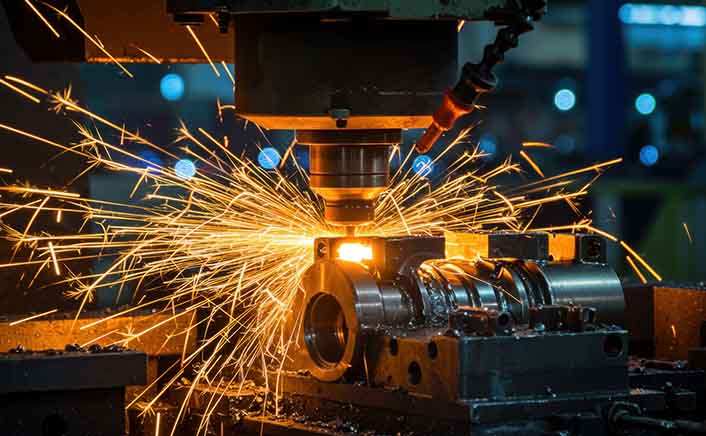
“Europe is emerging as the fastest-growing region in the Global Metal Working Equipment Market, driven by strong technological advancement and increasing focus on industrial modernization. The region is witnessing rising demand for high-precision and automated machinery, particularly across industries such as automotive, aerospace, and advanced manufacturing.”
The Europe Metal Working Equipment Market was valued at USD 18.09 Billion in 2025 and is projected to reach USD 27.55 Billion by 2033, with a compound annual growth rate (CAGR) of 17.60% from 2027 to 2033.
A key growth factor is the rapid adoption of Industry 4.0 practices, including smart factories, robotics, and digital manufacturing systems. Countries such as Germany, Italy, and France are investing heavily in upgrading their production facilities with CNC machines, IoT-enabled equipment, and energy-efficient technologies. This transition toward automation is significantly boosting demand for advanced metal working equipment.
Additionally, stringent environmental regulations are encouraging manufacturers to replace older machinery with energy-efficient and sustainable solutions. The presence of well-established engineering companies and a strong focus on research and development further accelerates innovation in the region.
Increasing integration of automation, robotics, and smart manufacturing systems is driving demand for advanced metal working equipment.
The adoption of Industry 4.0 is a major driver of growth in the Europe metal working equipment market. Manufacturers across the region are increasingly integrating advanced technologies such as automation, robotics, artificial intelligence, and the Internet of Things (IoT) into their production processes. These technologies enable real-time monitoring, predictive maintenance, and improved operational efficiency. As a result, there is a growing need for modern metal working equipment that can seamlessly connect with digital systems and support smart manufacturing environments. Companies are investing in CNC machines and automated production lines to reduce human error, improve precision, and enhance productivity. This shift also helps manufacturers respond quickly to changing customer demands and produce customized components. Overall, Industry 4.0 adoption is transforming traditional manufacturing into a more efficient, flexible, and data-driven ecosystem, significantly boosting demand for advanced metal working equipment across Europe.
High production and innovation in these industries require precision machining and advanced metal processing solutions.
Europe has a well-established automotive and aerospace industry, which plays a crucial role in driving the demand for metal working equipment. These industries require high-precision components made from metals such as steel, aluminum, and titanium, which necessitate advanced machining and forming technologies. The presence of leading automotive manufacturers and aerospace companies in countries like Germany, France, and the UK creates consistent demand for high-quality metal processing equipment. Additionally, the shift toward electric vehicles (EVs) and lightweight aircraft materials has further increased the need for innovative metal working solutions. Manufacturers are investing in advanced machines to improve efficiency, reduce material waste, and maintain strict quality standards. Continuous research and development in these sectors also encourage the adoption of new technologies. As production volumes and technological complexity increase, the reliance on sophisticated metal working equipment continues to grow across Europe.
Strict environmental regulations are pushing industries to adopt energy-efficient and eco-friendly equipment.
Sustainability and energy efficiency are becoming central priorities for manufacturers in Europe, significantly influencing the metal working equipment market. Strict environmental regulations and policies aimed at reducing carbon emissions are pushing companies to upgrade their machinery and adopt greener technologies. Modern metal working equipment is designed to consume less energy, minimize waste, and reduce environmental impact compared to older machines. This shift not only helps companies comply with regulations but also lowers operational costs in the long run. Additionally, there is a growing emphasis on recycling and efficient material usage, which requires advanced equipment capable of precise and optimized processing. Manufacturers are also adopting cleaner production techniques and investing in eco-friendly solutions to enhance their brand image and meet consumer expectations. As sustainability becomes a competitive advantage, the demand for energy-efficient and environmentally responsible metal working equipment continues to rise in Europe.
Continuous innovation in CNC and digitally controlled machines enhances productivity and boosts equipment demand.
Technological advancements in CNC (Computer Numerical Control) machinery are a key factor driving growth in the European metal working equipment market. Modern CNC machines offer high precision, speed, and repeatability, making them essential for producing complex components with minimal errors. Continuous innovation has led to the development of multi-axis machines, automation integration, and advanced software capabilities that enhance productivity and flexibility. These machines allow manufacturers to handle complex designs and reduce production time, which is critical in competitive industries. Additionally, the integration of digital tools such as simulation and real-time monitoring improves efficiency and reduces downtime. As industries demand higher quality standards and faster production cycles, the adoption of advanced CNC machinery becomes increasingly important. This ongoing technological progress not only improves manufacturing capabilities but also drives the replacement of outdated equipment, thereby fueling market growth across Europe.
Policies and funding programs across European countries encourage upgrading manufacturing infrastructure and equipment.
Government support plays a vital role in accelerating the growth of the metal working equipment market in Europe. Various national and regional governments are implementing policies and providing financial incentives to encourage industrial modernization and technological adoption. These initiatives include subsidies, tax benefits, and funding programs aimed at upgrading manufacturing infrastructure and promoting innovation. Governments are also supporting the transition toward digital manufacturing and smart factories as part of broader economic development strategies. This support helps small and medium-sized enterprises (SMEs) invest in advanced equipment that they might otherwise not afford. Additionally, collaborations between public institutions and private companies foster research and development, leading to technological advancements in metal working processes. By creating a favorable business environment and encouraging investment in modern machinery, government initiatives significantly contribute to the expansion and competitiveness of the metal working equipment market in Europe.
Competitive Landscape
Some of the major companies operating within the Metal Working Equipment market are: Phillips Machine Tools India Pvt. Ltd., FPS Werkzeugmaschinen GmbH, Haas Automation, Inc., Komatsu, JAINNHER MACHINE CO., LTD , KOYO Machinery, Maschinenfabrik Berthold HERMLE AG, TOHO CHIKAKOKI, Shandong Luzhong Machine Tool Co., Ltd. and Others.