Medium-Power Greenhouse Lighting Systems Dominate Europe as Commercial Growers Prioritize Energy Efficiency and Yield Optimization
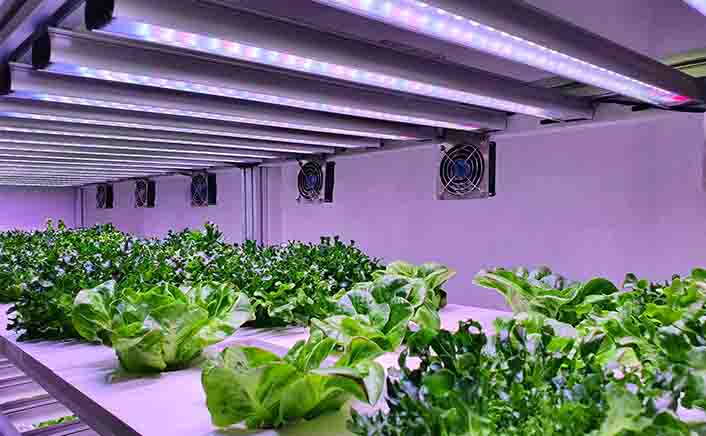
The power rating distribution within the European Greenhouse Lighting Market highlights the growing sophistication of greenhouse cultivation systems and a strong focus on maximizing crop productivity per square meter. Currently, medium-power fixtures, ranging from 300W to 600W, dominate the market, accounting for approximately 46.8% of total installations. This prevalence results from their versatility across various greenhouse applications. Commercial growers of tomatoes, peppers, cucumbers, strawberries, herbs, and ornamental plants often consider this power category as the optimal balance between energy consumption, light output, installation density, and return on investment. In modern glasshouse facilities, medium-power LED fixtures frequently serve as the primary supplemental lighting source, offering sufficient photosynthetic photon flux density (PPFD) without the higher capital costs associated with ultra-high-output systems. Their adaptability allows greenhouse operators to customize lighting intensity based on crop growth stages, seasonal daylight variations, and energy price fluctuations.
High-power fixtures, exceeding 600W, represent the second-largest market segment and are increasingly viewed as a key growth driver in the European greenhouse lighting industry. These systems are primarily utilized in technologically advanced greenhouses concentrated in countries such as the Netherlands, Germany, the United Kingdom, and select regions of France. High-wire vine crops, like tomatoes and cucumbers, require significant light intensity to sustain year-round production, especially in winter when natural solar radiation dramatically decreases. Commercial tomato facilities aiming for yields exceeding 70–90 kilograms per square meter annually are relying more on high-power lighting systems capable of delivering elevated PPFD levels throughout the crop canopy. The adoption of inter-lighting systems further boosts demand for this category, as growers seek to illuminate lower foliage layers and maintain photosynthetic activity throughout the entire plant structure. As greenhouse operators continue to prioritize production efficiency over merely reducing energy consumption, high-power fixtures are expected to capture an increasing market share in the coming years.
The transition from HPS to LED lighting technology has significantly impacted power rating preferences. Historically, HPS fixtures typically operated within the 600W to 1000W range, establishing high-power installations as the norm for many commercial greenhouses. However, advancements in modern LED technology have dramatically improved efficacy, allowing medium-power fixtures to achieve comparable, if not superior, crop performance with lower energy consumption. As a result, many growers engaged in retrofit projects have shifted portions of their lighting infrastructure towards the 300W–600W category. Nonetheless, the growing adoption of supplemental winter production strategies and high-density cultivation systems continues to drive robust demand for higher-power installations.
Low-power fixtures, below 300W, constitute the smallest segment of the market, representing approximately 18.5% of total demand. Their application is primarily found in propagation facilities, research institutions, seedling production centers, and niche greenhouse scenarios where light intensity requirements are lower. Commercial nurseries involved in young plant production, ornamental flowers, and vegetable transplants often prefer lower-power fixtures, as these operations prioritize uniformity and controlled development over maximum biomass production. Research facilities also utilize low-power systems due to their suitability for experimental trials focused on light spectrum optimization, crop physiology studies, and controlled environmental testing. While this segment remains relatively small, it stands to benefit from increasing investments in precision horticulture and academic research related to controlled environment agriculture.
Country-level cultivation patterns significantly shape power rating demand. The Netherlands leads in high-power lighting installations due to its extensive network of technologically advanced glasshouses operating on year-round production schedules. German growers exhibit a balanced distribution between medium-power and high-power systems, reflecting diverse greenhouse crop portfolios and rising investments in LED retrofits. The United Kingdom demonstrates a strong preference for high-output lighting solutions as greenhouse operators must compensate for limited winter sunlight. Conversely, Spain and Italy generally show greater demand for medium-power systems, benefiting from favorable solar conditions that reduce reliance on intense supplemental lighting. In these southern European markets, artificial lighting is typically used to enhance crop quality and extend production periods rather than to completely substitute natural sunlight. Economic factors also play a critical role in shaping power rating preferences within the industry.