Rising Consumption of Convenience Foods Accelerates Investment in Automated Ready Meal Processing Equipment
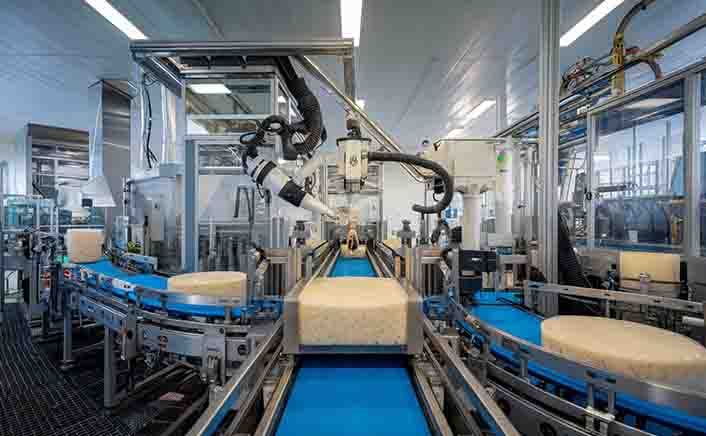
The dairy products segment stands out as the largest application area within the European Food Processing Equipment Market, representing approximately 21% of total equipment demand, equating to nearly 0.74 million units in 2024. Europe's dairy industry processes over 145 million metric tons of raw milk annually, positioning it as one of the most technologically advanced food manufacturing sectors globally. Countries like Germany, France, the Netherlands, Ireland, and Poland continue to make significant investments in membrane filtration systems, separators, pasteurizers, homogenizers, evaporators, and aseptic processing equipment. The rising production of high-value items such as infant formula, whey protein isolates, lactose-free dairy products, and protein-enriched beverages is increasing capital intensity throughout dairy processing facilities. In comparison to conventional food manufacturing, premium dairy plants typically require two to three times more investment per production line, thereby boosting equipment demand across the value chain.
Processed foods and ready meals represent the second-largest equipment-consuming segment, accounting for about 18% of market demand. The European convenience food industry has seen considerable growth due to urbanization, dual-income households, and an aging population, all of which drive the demand for ready-to-eat and ready-to-cook products. Food manufacturers are now channeling their investments into automated cooking systems, thermal processing equipment, portioning machinery, robotic packaging solutions, and integrated production lines. This segment is particularly robust in the United Kingdom, Germany, France, and Scandinavia, where convenience foods are established as a core category in retail grocery sales. Equipment purchases are increasingly focused on flexible manufacturing systems capable of accommodating multiple product formulations and shorter production runs.
The beverages segment contributes approximately 15% of equipment demand, bolstered by Europe’s leading role in producing soft drinks, alcoholic beverages, bottled water, dairy beverages, and functional drinks. Beverage manufacturers are allocating substantial capital toward filling systems, filtration technologies, carbonation equipment, pasteurization systems, and automated packaging lines. The rising popularity of energy drinks, protein beverages, low-sugar formulations, and ready-to-drink products is driving investments in advanced processing technologies. Beverage facilities are also operating at high production speeds, leading to an increased demand for sophisticated automation and quality control equipment.
Bakery and confectionery applications account for around 14% of total equipment demand, which translates to approximately 0.49 million units. Europe remains one of the largest bakery markets globally, with industrial bakeries investing heavily in automated mixing, dough handling, proofing, baking, cooling, and packaging systems. As labor shortages intensify, manufacturers are increasingly shifting from labor-intensive operations to automated production technologies. Demand is particularly strong in Germany, France, Italy, and Spain, where both traditional bakery products and packaged baked goods enjoy high consumption levels.
The meat, poultry, and seafood segment represents close to 12% of market demand. Equipment investments in this category are driven by stringent food safety regulations, traceability requirements, and an increasing necessity for automation. Processors are investing in cutting systems, deboning technologies, inspection equipment, chilling systems, and robotic handling solutions to enhance efficiency and compliance. Rising labor costs are accelerating the adoption of automation, as meat processing remains one of the most labor-intensive segments of food manufacturing.
Fruits and vegetables contribute roughly 8% of the market, underpinned by growing demand for frozen vegetables, packaged salads, fruit preparations, juices, and processed agricultural products. Investments in this area are primarily directed toward technologies for washing, sorting, peeling, cutting, freezing, and packaging. Southern European countries, such as Spain and Italy, are significant markets due to their substantial agricultural processing industries.
Snacks and cereals account for approximately 6% of equipment demand, benefiting from robust consumption of breakfast cereals, snack foods, granola products, and extruded snacks. Equipment suppliers are experiencing an uptick in demand for extrusion systems, roasting equipment, seasoning technologies, and automated packaging lines. Product innovation and premium snack categories continue to stimulate equipment replacement and modernization efforts.
Although smaller in absolute size, the pet food segment captures around 4% of total equipment demand and ranks among the fastest-growing application categories. Europe’s pet food industry exceeds EUR 30 billion in annual retail sales, prompting manufacturers to invest in extrusion, drying, coating, mixing, and packaging equipment. The rise of premium and functional pet nutrition products is increasing production complexity and capital expenditures within this segment.