In Depth Application Wise Analysis of Europe Fire Stopping Materials Market with Market Share Distribution Across Key Segments
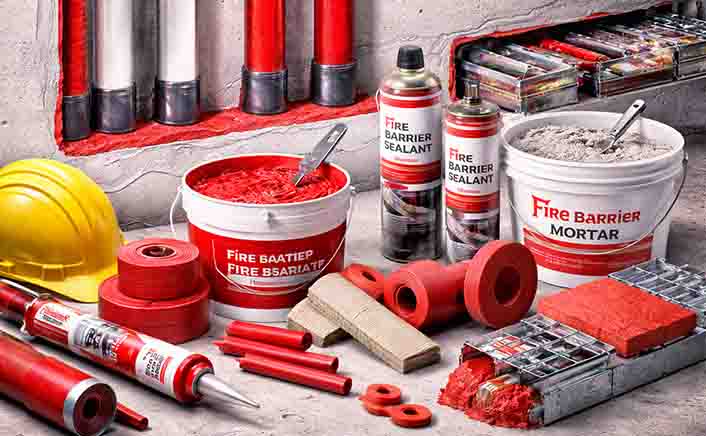
The Europe fire Stopping Materials Market is characterized by a clearly defined application-based segmentation. Penetration seals account for the largest portion of demand, approximately 35 percent. This dominance is largely due to the widespread use of pipes, cables, and conduits in contemporary construction projects, where it is crucial to maintain fire compartmentalization to prevent the spread of flames, smoke, and toxic gases. As buildings become more complex and integrate more electrical, plumbing, and communication systems, the need for dependable sealing solutions at penetration points continues to rise. This application is particularly vital in commercial complexes, hospitals, data centers, and industrial facilities, where seamless service routing must align with strict fire safety requirements.
Joints and gaps sealing represents around 20 percent of the market. Architectural designs incorporate expansion joints, construction joints, and various structural gaps to accommodate movement caused by thermal expansion, seismic activity, and structural settlement. If left unsealed, these gaps can facilitate fire propagation. Consequently, firestop sealants and related products are extensively used to maintain continuity of fire resistance throughout building elements. The increasing focus on airtight construction, especially in energy-efficient and passive buildings, underscores the significance of effective joint sealing solutions, contributing to both fire protection and thermal insulation performance.
Structural steel protection holds approximately 15 percent of the market share, driven by the necessity to maintain the load-bearing capacity of steel components during fire exposure. While steel is robust under standard conditions, it loses its mechanical strength at elevated temperatures, making passive fire protection critical. Fire-resistant coatings, intumescent paints, and spray-applied fireproofing materials are commonly employed to insulate steel structures and delay temperature increase. This segment is particularly relevant in high-rise buildings, industrial plants, and infrastructure projects, where ensuring structural integrity during fire incidents is paramount.
Duct and vent sealing comprises around 12 percent of the European fire stopping materials market. Although HVAC systems are essential for modern buildings, they can also facilitate the spread of fire and smoke without proper protection. Fire-rated duct sealants, collars, and wraps are utilized to prevent fire transmission through ventilation systems. With a growing emphasis on indoor air quality, energy efficiency, and climate control, HVAC installations are becoming increasingly sophisticated, resulting in a heightened need for specialized fire stopping solutions that ensure operational efficiency while adhering to fire safety standards.
Curtain wall perimeter firestopping accounts for approximately 10 percent of the market. Curtain wall systems, frequently used in commercial and high-rise structures, involve gaps between floor slabs and external façade systems that require sealing to prevent vertical fire spread. The firestop materials employed in these applications are designed to accommodate building movement while maintaining fire resistance at the perimeter joints. The expansion of urban infrastructure, contemporary architectural designs, and glass-dominated facades has driven increased adoption of perimeter firestopping systems across major European cities, particularly in office buildings, shopping centers, and mixed-use developments.
The remaining 8 percent of the market is attributed to other applications, which include specialized uses such as sealing around electrical enclosures, service penetrations in industrial equipment, tunnels, transportation infrastructure, and niche construction scenarios. While these applications may be smaller in scale, they collectively contribute to overall demand and often necessitate customized fire stopping solutions tailored to specific project requirements.
Overall, the application landscape of the European fire stopping materials market is shaped by the growing complexity of building systems, stringent regulatory frameworks, and an increasing emphasis on safety integrated with energy efficiency. Penetration seals and joint sealing dominate due to their broad applicability across all building types, while structural protection and HVAC-related sealing continue to gain significance in response to advancements in construction technologies. Furthermore, curtain wall firestopping is expected to experience steady growth as modern architectural trends favor high-rise glass structures. Together, these application segments reflect a market that is evolving in response to regulatory pressures and the technical demands of contemporary construction practices across Europe.