Europe EV Powertrain Market to Reach USD 49.89 Billion by 2033 Amid Accelerating Vehicle Electrification and Advanced E-Drive Adoption
The European EV Powertrain Market is entering a phase of strong expansion as automotive manufacturers accelerate electrification strategies and increase investments in next-generation propulsion technologies. The market was valued at USD 22.84 billion in 2025 and is projected to reach USD 49.89 billion by 2033, registering a CAGR of 10.2% during the forecast period.
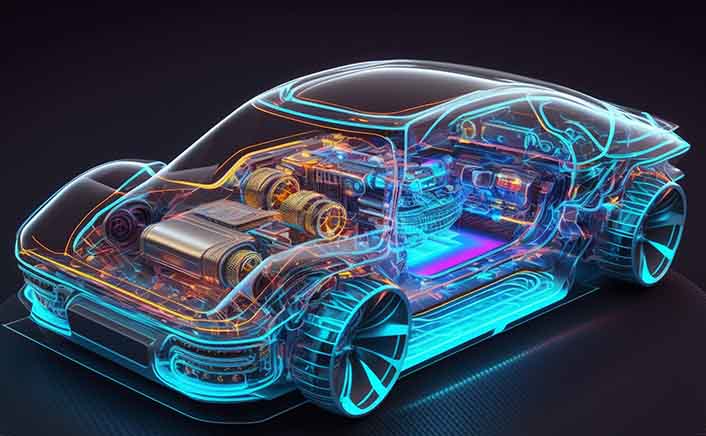
EV powertrains comprise electric motors, inverters, e-axles, electric transmissions, and integrated drive units that enable vehicle propulsion in battery electric vehicles (BEVs) and plug-in hybrid electric vehicles (PHEVs). As Europe advances toward ambitious carbon-reduction targets and zero-emission mobility objectives, demand for efficient, high-performance electric propulsion systems continues to strengthen across both passenger and commercial vehicle segments.
The market recorded sales of 3.72 million EV powertrain units in 2025 and is forecast to reach 7.39 million units by 2033. Growth is being supported by increasing EV production volumes, stricter emissions regulations, expansion of charging infrastructure, and growing investments in regional manufacturing capabilities. The continued shift from internal combustion engine vehicles toward electric mobility is creating sustained demand for advanced powertrain technologies across the European automotive industry.
Germany, France, the United Kingdom, Spain, and Italy represent the largest markets for EV powertrain deployment and manufacturing. These countries benefit from established automotive ecosystems, strong engineering capabilities, government-supported electrification programs, and substantial investments in EV production facilities. Several automotive manufacturers are also expanding localized powertrain production to improve supply chain resilience and reduce dependence on imported components.
Technology innovation remains a major competitive factor across the industry. Manufacturers are increasingly adopting integrated e-drive systems that combine electric motors, power electronics, and transmission components into compact architectures. These systems offer improved efficiency, reduced weight, lower manufacturing complexity, and enhanced vehicle performance. At the same time, the growing adoption of silicon carbide power electronics is improving energy efficiency, extending driving range, and supporting higher-voltage vehicle platforms.
The market is also witnessing rapid growth in software-enabled propulsion technologies. Advanced control algorithms, predictive maintenance capabilities, regenerative braking optimization, and intelligent energy management systems are becoming increasingly important differentiators among suppliers. As vehicles become more software-defined, powertrain systems are evolving beyond mechanical components into integrated hardware-software platforms.
Passenger electric vehicles currently account for the largest share of market demand due to increasing consumer adoption and expanding model availability across Europe. However, commercial vehicle electrification is emerging as one of the most attractive growth opportunities. Logistics operators, public transit agencies, and fleet owners are increasingly adopting electric buses, delivery vehicles, and commercial fleets to reduce operating costs and meet sustainability targets, creating strong demand for high-performance powertrain systems.
The industry is also benefiting from growing investments in manufacturing localization. European policymakers and automotive companies are prioritizing domestic production of critical EV components to strengthen industrial competitiveness and reduce supply chain vulnerabilities. These initiatives are creating new opportunities across electric motor manufacturing, power electronics production, and integrated drive unit assembly.
The competitive landscape remains moderately consolidated, with major suppliers including Bosch, ZF Friedrichshafen, Valeo, Continental, Schaeffler, and Vitesco Technologies actively investing in electrification technologies and in expanding production capacity. Strategic partnerships, technology collaborations, and acquisition activity continue to shape the competitive landscape as companies seek to strengthen their positions within the rapidly evolving electric mobility ecosystem.
Looking ahead, continued growth in EV adoption, advancements in power electronics, expansion of high-voltage vehicle architectures, and increasing deployment of integrated e-drive systems are expected to support long-term market expansion. As Europe continues its transition toward sustainable transportation, EV powertrains are positioned to become one of the most critical and valuable segments within the region's automotive value chain.