Discover the Hidden Forces Fueling the Rapid Expansion of Europe’s CTD System Market
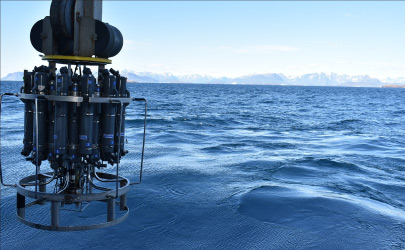
The Europe oceanography CTD system market is currently on a steady upward trajectory, primarily driven by the region's robust emphasis on marine research, climate monitoring, and the sustainable management of ocean resources. Europe has historically maintained a leadership position in oceanographic exploration, bolstered by advanced research infrastructure, well-funded marine institutes, and proactive government involvement in environmental monitoring initiatives. In 2023, the market was valued at approximately USD 95.6 million and is anticipated to reach USD 153.6 million by 2032, reflecting a compound annual growth rate (CAGR) of 5.9 percent from 2026 to 2032. The increasing demand for precise and continuous measurements of salinity, temperature, and depth across the Atlantic, North Sea, and Mediterranean is fostering widespread adoption of CTD systems in both scientific and commercial sectors.
Within the European landscape, Germany maintains a leading share of the CTD system market due to significant investments in marine research infrastructure and collaborations with global scientific organizations. Prominent institutions, such as the Helmholtz Association and the German Research Foundation, extensively deploy CTD systems for deep-sea and coastal environmental studies. Germany's commitment to offshore renewable energy development, which includes wind farms and subsea grid projects, further enhances the demand for reliable CTD systems for environmental baseline monitoring and marine data acquisition. The German market is projected to grow at a CAGR of 6.6 percent through 2032, representing one of the fastest growth rates in the region.
The United Kingdom also plays a pivotal role in shaping the Europe oceanography CTD system market, supported by its extensive oceanographic capabilities and dedication to maritime sustainability. Key contributors include the Natural Environment Research Council (NERC) and the National Oceanography Centre (NOC), which deploy advanced CTD systems for ongoing ocean observations. The UK’s geographic advantage, surrounded by various marine zones, along with its leadership in offshore exploration, fortifies its dominant market position. By 2032, the UK market is expected to reach USD 46.5 million, growing at a CAGR of 5.6 percent. Moreover, the integration of CTD instruments with autonomous underwater vehicles and research vessels is enhancing operational efficiency and data precision, aligning with the nation's transition toward digital marine data platforms.
France also significantly contributes to the Europe oceanography CTD system market, supported by strong research initiatives led by the French Research Institute for Exploitation of the Sea (IFREMER) and other scientific entities. With extensive coastlines on both the Atlantic and Mediterranean, France engages in active research on ocean currents, salinity variations, and water quality assessments. The adoption of CTD systems is being accelerated by government-backed environmental initiatives addressing marine pollution and coastal zone management. France's market is projected to grow at a CAGR of 6.3 percent during the forecast period, driven by increasing usage in academic research and monitoring within the offshore industry.
Italy is experiencing moderate growth within the Europe oceanography CTD system market, with applications that range from marine biodiversity monitoring to port management and coastal hydrology. Italian institutes, such as the National Research Council’s Institute of Marine Sciences (CNR-ISMAR), employ CTD systems for hydrographic surveys and ecosystem health studies. The country's lengthy Mediterranean coastline presents opportunities for studying temperature-salinity profiles and deep-water mass formations; however, limited funding compared to northern European countries may hinder large-scale deployment. Italy's market is expected to rise from USD 7.4 million in 2026 to USD 9.4 million by 2032, growing steadily at a CAGR of 4.1 percent.
Spain, though relatively smaller in market size, is making gradual progress in the Europe oceanography CTD system market through active involvement in EU-funded marine research projects. The Spanish Institute of Oceanography and coastal observatories are implementing CTD technologies to monitor salinity gradients and temperature fluctuations that impact fisheries and coastal ecosystems. Spain's market is projected to reach USD 7.4 million by 2032, experiencing a CAGR of 3.5 percent, primarily driven by the growth of marine conservation and aquaculture monitoring initiatives.
The Rest of Europe category, which includes countries like Norway, Denmark, and the Netherlands, displays strong growth potential within the Europe oceanography CTD system market, propelled by rising offshore exploration and advanced environmental monitoring practices. These nations are recognized as global leaders in maritime technology and sustainable ocean industries. For instance, Norway integrates CTD systems into its Arctic observation programs and oil exploration surveys, while Denmark utilizes these systems in Baltic Sea monitoring projects. Collectively, these countries are forecasted to exhibit a CAGR of 6.5 percent through 2032.