Europe AdBlue Market by Solution Type: Standard and Premium Urea Solutions Driving SCR Emission Control Growth
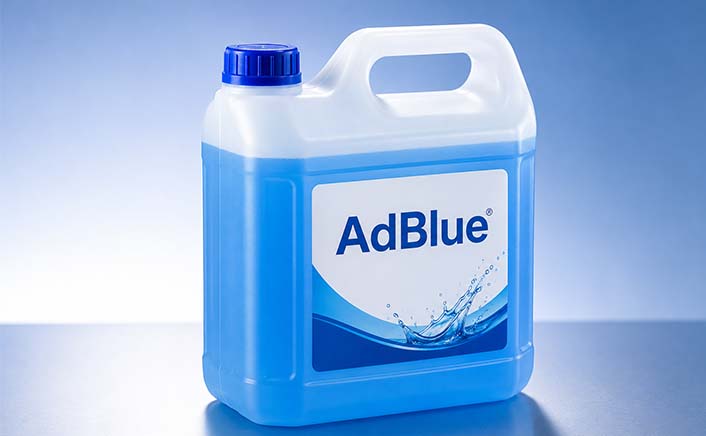
The Standard AdBlue (32.5% Urea Solution) segment holds a significant position in the European AdBlue Market, making up approximately 88.5% of total demand. This dominance is primarily due to its widespread acceptance across various applications, including passenger vehicles, commercial trucks, buses, agricultural machinery, and industrial equipment equipped with Selective Catalytic Reduction (SCR) technology. Standard AdBlue, which is produced in accordance with ISO 22241 specifications, consists of 32.5% high-purity urea and 67.5% demineralized water, making it the preferred emission reduction fluid for most diesel vehicles utilizing SCR technology.
The strong presence of this segment can be attributed to the extensive integration of Euro VI-compliant heavy-duty vehicles within European freight networks. Operators of commercial trucks, logistics companies, and fleet managers often favor standard-grade AdBlue for its reliable nitrogen oxide (NOx) reduction performance and cost-effectiveness in high-volume consumption scenarios. Heavy commercial vehicles represent the largest consumer group for standard AdBlue, driven by their increased diesel usage and continuous operating cycles. A long-haul truck traversing European transport corridors can consume a substantial amount of AdBlue annually, depending on factors such as mileage, payload, driving conditions, and engine calibration. As logistics activities in Europe expand, particularly in e-commerce and cross-border freight movement, the demand for standard-grade AdBlue closely aligns with the growth in commercial transportation.
Key European countries, including Germany, France, Poland, the Netherlands, and Italy, play a significant role in consumption due to their large commercial vehicle fleets and strategic importance within freight transportation. The dominance of standard AdBlue is further reinforced by the availability of well-established production and distribution infrastructure. Major nitrogen chemical producers and AdBlue suppliers have developed extensive supply networks that include bulk deliveries via tankers, intermediate bulk containers (IBCs), fuel station dispensing systems, and automotive aftermarket channels. Fleet operators typically purchase standard AdBlue in bulk through direct supply agreements to optimize their operating costs and ensure reliable availability. The widespread presence of fuel stations with AdBlue dispensing facilities enhances accessibility for both commercial and passenger vehicle users.
Another critical aspect supporting the standard segment is the cost sensitivity of high-volume users. Transportation companies managing large fleets prioritize predictable operating expenses, making standard AdBlue the economically favored choice. Most SCR systems in Euro VI vehicles are designed to work efficiently with compliant standard AdBlue, leading fleet owners to avoid enhanced purity variants unless under specialized conditions. This balance of cost and performance allows standard AdBlue to maintain its leading position in the European market.
On the other hand, the Premium AdBlue (Enhanced Purity / Low Contamination Grade) segment, while smaller at approximately 11.5% market share, represents a growing opportunity within the European AdBlue Market. This growth is driven by increasing awareness regarding SCR system protection, equipment reliability, and long-term maintenance costs. Premium AdBlue products are made with stricter impurity control, enhanced filtration processes, and advanced quality management systems to mitigate contamination risks. Such products are becoming more favored among users of high-value vehicles, specialized machinery, and equipment where optimal SCR catalyst performance and uptime are paramount.
The adoption of Premium AdBlue is particularly relevant for heavy-duty fleet operators managing expensive truck assets, construction companies operating advanced machinery, and industrial users who require maximum reliability from emission control systems. Contaminated or low-quality urea solutions can adversely affect SCR components such as injectors, pumps, and catalysts, leading to increased maintenance costs and vehicle downtime. As awareness of emission system maintenance grows, some fleet operators are transitioning toward higher-quality AdBlue solutions despite the increased costs associated with premium products.
The premium segment is also benefiting from the advancement of technology in European commercial vehicles. Modern diesel engines feature sophisticated emission management systems with tighter operational tolerances, which heighten the importance of using high-quality consumables. Manufacturers of premium AdBlue focus on enhanced purity, controlled production environments, and compliance assurance to appeal to customers seeking operational reliability rather than opting for minimum-cost solutions.
Growth in the premium AdBlue segment is further supported by rising demand from off-road applications in sectors such as construction, mining, and agriculture. The machinery used in these industries frequently operates under more demanding conditions, emphasizing the need for reliable, high-quality AdBlue solutions.