European Union policies promote reduced carbon emissions and higher energy efficiency, pushing industries to adopt advanced, eco-friendly cooling towers that comply with environmental standards.
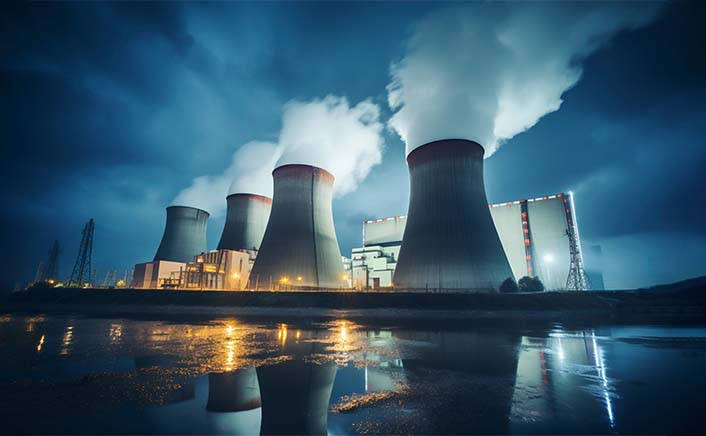
Europe is quickly becoming the leader in the cooling towers market, due to a surge in investments aimed at building sustainable infrastructure and strict environmental laws. Governments throughout the region are introducing energy efficiency standards and emission reduction goals that encourage industries to embrace modern cooling technologies.
The Europe Cooling Towers Market was valued at USD 809 Million in 2025 and is projected to reach USD 1,205 Million by 2033, with a compound annual growth rate (CAGR) of 18.20% from 2026 to 2033.
In urban areas, especially in countries like Germany, France, and the UK, there's a rising demand for district cooling systems, which is fueling market growth. Many businesses are focused on upgrading older power plants and industrial sites with energy-efficient cooling solutions, further driving this expansion.
The shift towards renewable energy sources, along with the increase in nuclear and solar power plants, is creating a need for more effective cooling systems. With ongoing technological advancements and the presence of key manufacturers committed to innovation, the adoption of these systems is accelerating. Overall, Europe’s dedication to meeting climate goals and modernizing its industrial operations is significantly propelling growth in the cooling towers market throughout the region.
1. Policies from the European Union encourage lower carbon emissions and more energy efficiency, which forces businesses to use cutting-edge, environmentally friendly cooling towers that meet regulations.
Europe is famous for having some of the toughest environmental laws around. The European Union (EU) has put in place a range of rules aimed at cutting down greenhouse gas emissions and boosting energy efficiency, with initiatives like the EU Green Deal and the Energy Efficiency Directive. These regulations are pushing industries to reduce their carbon footprints and adopt practices that promote sustainability.
As a result, many companies are swapping out their old cooling systems for new, eco-friendly cooling towers. These modern systems not only use less water but also rely on greener materials and produce fewer emissions. For businesses operating in Europe, following these regulations is no longer just a choice; it’s essential. This shift means that cooling towers that comply with these strict environmental standards are becoming more common in power plants, factories, and commercial buildings.
The focus on sustainable practices is driving a growing demand for advanced cooling towers, underscoring how important environmental policies are in shaping industry growth in the region.
2. Rapid urban development and rising demand for sustainable cooling in commercial and residential complexes are increasing the adoption of district cooling systems that rely on efficient cooling towers.
The demand for effective cooling solutions is clearly rising as cities around Europe, particularly Paris, Berlin, and Stockholm, continue to expand. Because they enable a central facility to supply chilled water to numerous buildings, district cooling systems are growing in popularity as a way to lower energy use.
Cooling towers play a crucial role in these systems by removing excess heat from the chilled water. To support the development of smart cities, governments and municipalities are making significant investments in sustainable urban infrastructure, including district energy systems. This effort not only boosts the usage of cooling towers but also encourages innovative designs that are compact, quiet, and energy-efficient, making them ideal for urban environments.
Additionally, the European Commission is backing low-carbon and energy-efficient technologies, which is helping to integrate district cooling networks even further. As a result, the combination of urban growth and a focus on environmental sustainability is driving significant growth in the cooling tower market throughout Europe.
3. Upgrading aging industrial infrastructure, particularly in manufacturing and power generation sectors, is driving demand for modern cooling tower systems with better efficiency and lower water usage.
Many industrial facilities across Europe, especially in countries like Germany, Italy, and Poland, are getting a much-needed upgrade to enhance energy efficiency and boost productivity. Companies are replacing their aging infrastructure with state-of-the-art equipment, including high-performance cooling towers. These new systems are designed to use less energy and water, require less maintenance, and perform better when it comes to managing heat.
In energy-heavy industries like chemicals, metallurgy, and power generation, cooling towers play a crucial role in dissipating heat. To stay competitive and compliant with regulations, companies are increasingly swapping out their old models for more modern solutions, such as modular, hybrid, or closed-loop systems. These upgrades can lead to significant long-term savings.
Moreover, the European Union and national governments are providing funding and incentives to encourage these modernization efforts, making it easier for businesses to invest in advanced cooling technologies. This ongoing wave of industrial renewal is driving steady demand for cooling towers throughout the region, highlighting how crucial these upgrades are to market growth.
4. The growth of renewable energy facilities, such as solar thermal and nuclear power plants, requires efficient heat rejection systems, boosting the need for cooling towers.
Europe is at the forefront of the global energy transition, making significant investments in renewable sources like solar, wind, and nuclear power. While solar panels and wind turbines generally don’t need water for cooling, technologies like concentrated solar power (CSP) and nuclear plants do. These facilities use cooling towers to manage the heat produced during energy generation. Countries like France and Spain are ramping up their nuclear and CSP capabilities, respectively, which increases the demand for efficient cooling systems.
Additionally, waste-to-energy plants, biomass facilities, and combined heat and power (CHP) systems also depend on cooling towers to keep things running smoothly. As Europe moves away from fossil fuels toward greener energy solutions—driven by the EU's climate action targets—there’s a significant push for high-efficiency cooling towers. This growing emphasis on renewable energy means that cooling towers are becoming a critical part of Europe’s clean energy future.
5. Europe’s push for green buildings and energy-efficient HVAC systems encourages the use of modern cooling towers to reduce environmental impact and operational costs.
The European construction industry is increasingly focusing on green building standards like BREEAM (Building Research Establishment Environmental Assessment Method) and LEED (Leadership in Energy and Environmental Design). These frameworks encourage the adoption of sustainable and energy-efficient technologies in all types of buildings, from homes to commercial spaces. A vital component in this movement is cooling towers, which provide energy-efficient thermal management for HVAC systems.
Modern cooling towers are designed to minimize both electricity and water usage, making them a perfect fit for sustainability initiatives. Developers and building owners are now turning to advanced cooling tower systems that support low-emission designs, work seamlessly with renewable energy sources, and meet environmental certification standards.
As climate change becomes an increasing concern, energy performance has become a crucial factor in planning new construction and renovation projects. This shift toward environmentally friendly building practices is driving a rising demand for innovative cooling tower solutions in urban and commercial settings across Europe.
Competitive Landscape
Some of the major companies operating within the Cooling Towers market are: Kelvion Holding GmbH, HAMON & CIE (INTERNATIONAL) S.A., MITA Cooling Technologies Srl, JACIR – GOHL , ILMED IMPIANTI SRL, JAEGGI Hybridtechnologie AG, EVAPCO, Inc. and Others.