Automotive and Aerospace Industries Drive Growth Opportunities in the Europe CNC Machine Market Through Advanced Manufacturing
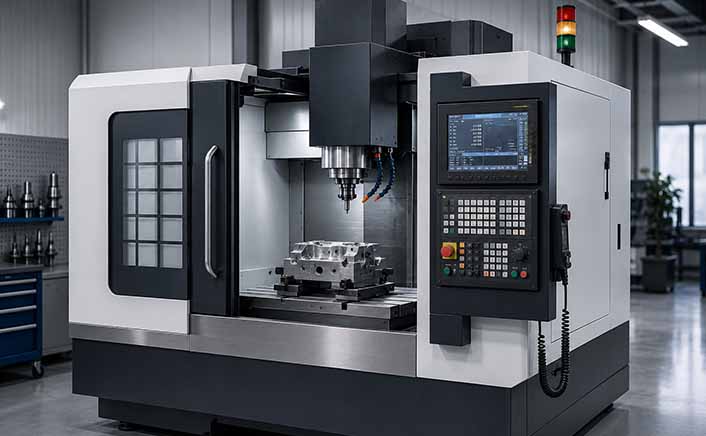
The end-use industry landscape of the Europe CNC Machine Market is significantly shaped by the region's advanced manufacturing ecosystem, with the automotive, industrial machinery, and aerospace sectors being the primary demand centers. In contrast to emerging markets, where CNC adoption is often driven by basic manufacturing expansion, the demand for CNC machines in Europe is primarily fueled by precision engineering requirements, automation investments, production localization, and the shift toward digitally connected factories. The increasing complexity of manufactured components, particularly in electric vehicles, aerospace systems, medical devices, and semiconductor equipment, is prompting manufacturers to invest in high-performance CNC machining solutions.
The automotive industry stands out as the largest application segment within the Europe CNC Machine Market. This trend is largely driven by Europe's shift from conventional vehicle production to electric and hybrid mobility manufacturing. Automotive OEMs and Tier-1 suppliers are progressively deploying CNC machining centers, multi-axis machines, and automated production cells to manufacture battery housings, electric motor components, transmission parts, lightweight aluminum structures, and precision mechanical assemblies. Key automotive manufacturing hubs such as Germany, Italy, France, and Spain are witnessing suppliers upgrade their production capabilities to enhance efficiency, reduce machining cycle times, and accommodate flexible manufacturing demands. The transition to electric vehicles has further amplified the need for CNC systems adept at processing aluminum alloys, copper components, and advanced lightweight materials.
The industrial machinery sector also represents a major demand segment, bolstered by Europe’s robust base of machine builders, automation firms, and engineering companies. Manufacturers engaged in producing industrial robots, hydraulic systems, pumps, compressors, production equipment, and factory automation components require CNC machines that can deliver high accuracy and repeatability. The growing adoption of smart manufacturing technologies is driving industrial equipment producers to integrate advanced machining capabilities with robotics, automated inspection systems, and real-time production monitoring. This trend is fostering sustained investment in CNC turning centers, milling machines, and five-axis machining systems.
The aerospace and defense sector maintains a significant position due to the rising demand for complex, high-precision components. European aerospace manufacturers are heavily reliant on advanced CNC technologies for machining aircraft structures, turbine components, landing gear parts, and defense equipment crafted from titanium, composites, and high-strength alloys. Five-axis machining centers are particularly invaluable in this sector, allowing manufacturers to produce intricate geometries while minimizing multiple setup needs. An increase in aircraft modernization programs and defense spending throughout European countries is expected to sustain a steady demand for advanced CNC equipment.
Medical device manufacturing is emerging as one of the fastest-growing application areas. The production of orthopedic implants, surgical instruments, dental components, and customized medical devices necessitates ultra-precise machining capabilities. Countries like Switzerland, Germany, and Ireland have established medical technology clusters that increasingly leverage CNC machining for high-value healthcare products. The rising adoption of patient-specific implants and minimally invasive surgical tools is prompting manufacturers to invest in high-speed machining systems that ensure strict dimensional accuracy and surface quality.
The electronics and semiconductor industry is gaining prominence within the Europe CNC Machine Market due to investments in semiconductor manufacturing capacity and advanced electronic component production. CNC machines are increasingly employed to produce semiconductor equipment parts, precision tooling, cooling systems, and specialized mechanical components that require extremely tight tolerances. Europe’s strategic emphasis on enhancing its domestic semiconductor capabilities is expected to generate additional demand for precision machining technologies.
Finally, mold and die manufacturing remains a vital application segment, particularly for producing automotive components, consumer products, and industrial equipment. CNC milling, EDM, and grinding machines are extensively utilized to create complex molds that exhibit high surface quality and durability. As manufacturers aim for shorter product development cycles and greater design flexibility, the demand for advanced tooling solutions continues to encourage CNC adoption. The energy and power industries are also contributing to market growth through investments in renewable energy infrastructure, wind turbines, power generation equipment, and grid modernization projects, necessitating CNC machines for the production of large precision components such as turbine parts, shafts, and specialized mechanical assemblies.