Packaging Continues to Dominate the Europe Circular Plastics Market as Recycled Content Regulations Drive Demand Across Industries
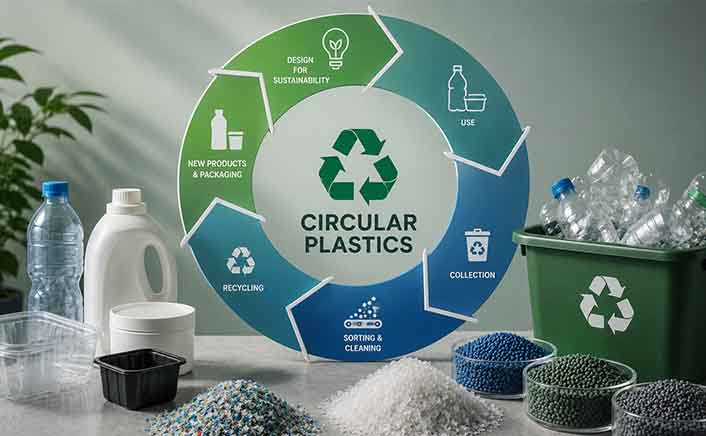
The Europe Circular Plastics Market is primarily influenced by the packaging industry, which holds the largest market share due to strict European regulations that promote the use of recycled-content packaging and notable investments in food-grade recycled polymers. Packaging represents nearly 40% of the total market demand, as PET, HDPE, and PP packaging waste benefits from established collection networks, deposit return systems, and advanced recycling infrastructure throughout Europe. Beverage manufacturers, food producers, personal care brands, and household product companies are increasingly using recycled plastics for bottles, containers, caps, trays, and flexible packaging in order to comply with recycled-content mandates and reduce reliance on virgin polymers. The availability of high-quality recycled PET and HDPE has further solidified packaging's dominant position, making it the primary revenue driver in the Europe Circular Plastics Market.
The automotive sector is the second-largest application segment, with European vehicle manufacturers integrating recycled plastics into various components such as interior trims, dashboards, bumpers, wheel liners, underbody shields, battery housings, and structural elements. There is growing pressure on automotive OEMs to reduce vehicle lifecycle emissions and enhance material circularity without sacrificing performance. Engineering polymers like recycled polypropylene, polyamide, ABS, and polycarbonate are increasingly substituting virgin materials, especially in electric vehicles, where lighter constructions contribute to greater driving efficiency. Ongoing collaboration among recyclers, resin manufacturers, and automotive suppliers is facilitating the development of high-performance recycled compounds that meet the rigorous demands of the automotive sector.
The building and construction industry also plays a significant role, relying on the durability of plastic products for applications such as pipes, window profiles, insulation panels, flooring, roofing membranes, cable ducts, and drainage systems. PVC recycling has matured in Europe through specialized collection and closed-loop systems, and the long lifecycles of plastic materials ensure a steady availability of recoverable resources. Additionally, green building certifications promote the use of recycled-content construction products, while investments in infrastructure renovation and energy-efficient buildings continue to drive demand for circular plastic materials across residential, commercial, and industrial projects.
In the electrical and electronics sector, manufacturers are increasingly seeking recycled engineering plastics for various applications, including consumer electronics, appliances, industrial electrical equipment, and electronic housings. The implementation of Waste Electrical and Electronic Equipment (WEEE) regulations has significantly improved collection rates for electronic waste, enhancing the supply of recoverable engineering polymers such as ABS and polycarbonate. Advanced sorting technologies that can separate flame-retardant plastics and mixed engineering resins are further boosting material recovery efficiency, allowing electronics manufacturers to incorporate certified recycled plastics while maintaining quality and regulatory compliance.
Consumer goods remain a key application area, spurred by rising demand for sustainable household products, reusable containers, toys, luggage, sports equipment, and personal care packaging. Major multinational consumer brands are redesigning products to enhance recyclability while increasing the recycled polymer content across their portfolios. Circular design principles encourage manufacturers to simplify polymer combinations and enhance end-of-life recyclability, thereby creating more opportunities for suppliers of recycled plastics.
The textiles and fibers segment is rapidly evolving, with recycled PET gaining traction for use in polyester fiber production. Fashion brands, home furnishing manufacturers, and industrial textile producers are expanding their use of recycled fibers in clothing, carpets, upholstery, and technical fabrics. Growing regulatory focus on textile circularity and extended producer responsibility is anticipated to further accelerate demand for recycled polymer feedstocks in the coming years.
Lastly, industrial products hold a stable market position, with applications including pallets, crates, storage bins, logistics containers, cable reels, machine guards, and industrial packaging. These products benefit from lower aesthetic requirements, allowing for broader use of recycled polymers with varying material qualities. Closed-loop recycling within industrial supply chains also supports consistent demand and improved material utilization. Medical and healthcare applications currently account for a modest market share, as strict regulatory requirements continue to limit the use of recycled plastics in direct patient contact products.