Rapid urbanization, tightening emissions regulations, and the expansion of last-mile delivery services are accelerating the adoption of electric scooters across China’s urban and semi-urban mobility ecosystem.
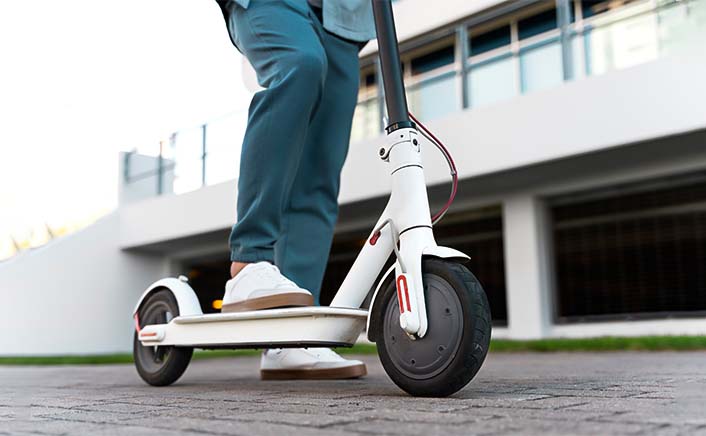
China has emerged as the world’s largest and most structurally mature electric scooter market, supported by high urban density, regulatory alignment with electric mobility, and deeply embedded daily use. The market is increasingly driven by replacement demand, penetration across lower-tier cities, and gradual premiumization through lithium-ion batteries and innovative features. Electric scooters have evolved into essential mobility assets rather than discretionary transport options, particularly across major metropolitan and logistics-intensive regions.”
The Chinese Electric Scooters Market is valued at USD 12.7 billion in 2025 and is projected to grow at a 6.0% CAGR through 2033, reaching USD 20.3 billion by the end of the forecast period. Growth is supported by consistently high annual unit volumes, strong domestic manufacturing capacity, and sustained demand from personal commuters, delivery riders, and small commercial users. China’s scale advantage and cost-efficient production ecosystem continue to reinforce its leadership position within the global electric two-wheeler landscape.
Ongoing urban mobility transformation across China is driving the steady adoption of electric scooters as cities restrict internal-combustion two-wheelers, expand electric-vehicle infrastructure, and promote cleaner transport alternatives. Electric scooters are increasingly favored for short-distance commuting and commercial operations due to their low operating costs, regulatory compliance, and suitability for dense urban environments. In parallel, declining lithium-ion battery costs and incremental technology upgrades are improving product value propositions across mid-range and premium segments.
Replacement-driven demand is the primary driver sustaining market growth.
China’s electric scooter market is overwhelmingly replacement-led, with vehicles typically replaced every 3 to 5 years due to intensive daily use. This replacement cycle ensures stable annual demand volumes independent of broader economic cycles. Unlike growth in emerging markets driven by first-time adoption, China’s growth is anchored in fleet renewal, thereby providing manufacturers with predictable revenue streams.
Expansion of the delivery and logistics economy is strengthening demand fundamentals.
Electric scooters are a critical asset for China’s food delivery, courier, and last-mile logistics sectors. Millions of riders rely on electric scooters to generate income, reinforcing non-discretionary demand. As urban consumption and e-commerce activity continue to expand, commercial usage remains a key contributor to sustained market volumes.
Rising adoption in lower-tier cities is supporting incremental volume growth.
While Tier 1 and Tier 2 cities exhibit high penetration, Tier 3 and Tier 4 cities continue to experience rising adoption, driven by affordability, limited public transport infrastructure, and favorable regulatory conditions. These regions are contributing incremental unit growth, partially offsetting the effects of maturity in larger metropolitan areas.
Lithium-ion battery penetration is driving gradual premiumization.
Lithium-ion batteries now account for a growing share of new electric scooter sales, offering greater range, lower maintenance, and improved safety compared with lead-acid alternatives. This shift is increasing average transaction values and supporting value growth despite pricing pressure in the mass-market segment.
Regulatory standardization is reinforcing market stability and consolidation.
National and city-level regulations governing speed limits, vehicle weight, and battery safety have created a standardized operating environment. These regulations raise compliance requirements and entry barriers, favoring established manufacturers with scale, distribution reach, and manufacturing expertise, while contributing to long-term market stability.
Competitive Landscape
The Chinese electric scooter market is moderately consolidated, with leading domestic manufacturers capturing a significant share of total sales through extensive dealer networks, cost-efficient production, and strong brand recognition. Mass-market leadership is held by companies such as Yadea Group and Aima Technology Group, while players including Sunra Electric Vehicle, Luyuan Electric Vehicle, and Xinri E-Vehicle maintain strong regional and export-oriented positions. The premium and smart scooter segment is led by brands such as Niu Technologies, Segway-Ninebot, and XDAO. At the same time, manufacturers like Tailg Electric Vehicle and Vmoto China enhance competitive depth through diversified product portfolios and international market exposure.