Hyperscale Data Centers Driving the Next Phase of Brazil’s Digital Infrastructure Expansion Across São Paulo and Northeast Regions
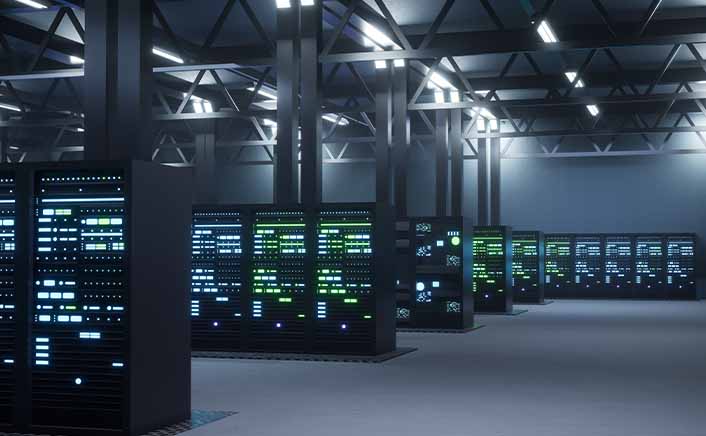
The structure of Brazil's Data Center Market is undergoing a significant transformation, moving away from traditional enterprise-owned infrastructure towards a model dominated by hyperscale and colocation facilities. Hyperscale data centers now account for approximately 34% of the total market share, while colocation holds 29%, enterprise/on-premise facilities represent 18%, edge data centers make up 12%, and managed hosting comprises 7%. This distribution reflects not only the trends in digital adoption but is also influenced by Brazil's physical infrastructure limitations, regional power distribution patterns, and investment cycles driven by hyperscalers.
Hyperscale data centers are emerging as the primary growth engine in the market. Brazil has positioned itself as a strategic expansion point for global cloud providers such as AWS, Microsoft Azure, Google Cloud, and Oracle Cloud, all of which are actively establishing or expanding their availability zones to cater to both domestic enterprise demand and larger Latin American workloads. A crucial factor contributing to the dominance of hyperscale facilities is the increasing compute density necessitated by AI workloads, which are seeing a shift in power requirements from traditional 5–10 kW per rack to 20–80 kW per rack in GPU-intensive setups. This evolution necessitates purpose-built hyperscale campuses equipped with advanced power and liquid cooling systems, designed typically in the range of 20–100+ MW, offering economies of scale that cannot be matched by enterprise or mid-tier facilities.
In the second-largest segment, colocation data centers maintain approximately a 29% share and serve as the backbone of Brazil’s hybrid IT ecosystem. This segment is primarily concentrated in São Paulo, the country’s main digital and financial hub. However, the colocation market in São Paulo is starting to see capacity saturation, with utilization levels estimated between 70% and 80% in key clusters. This saturation is leading to pricing pressure and extended lead times for new deployments. Consequently, operators such as Equinix, Ascenty, ODATA, and Scala Data Centers are rapidly expanding into secondary metros and energy-rich areas. The demand for colocation services is primarily driven by financial services, telecom operators, and large enterprises that require proximity to latency-sensitive applications while hesitating to fully transition to hyperscale cloud environments due to reasons related to compliance, legacy integration, or cost optimization. Colocation providers are increasingly evolving into hybrid infrastructure partners, offering not just rack space but also interconnection services, cloud on-ramps, and edge connectivity solutions.
Enterprise or on-premise data centers, contributing 18% to the market, continue to lose relative share but remain crucial in regulated sectors such as banking, government, and industrial manufacturing. The enterprise IT landscape in Brazil is still characterized by legacy systems in large state-owned enterprises and traditional banking institutions, although a gradual shift towards hybrid cloud architectures is taking place. This transition is being hastened by the rising costs associated with maintaining proprietary infrastructure, especially in a context of increasing energy prices and cooling requirements due to higher compute densities. Many enterprises are now adopting a “lift-and-optimize” strategy, migrating non-core workloads to colocation or cloud environments while retaining mission-critical systems on-premise. This approach is leading to a gradual decline in the market share of enterprise data centers over time.
Edge data centers, which hold around 12% of the market share, are emerging as one of the fastest-growing segments. This growth is predominantly driven by Brazil’s nationwide 5G rollout and the escalating demand for ultra-low latency applications. Unlike hyperscale facilities that are concentrated in São Paulo or Northeast hubs, edge data centers are strategically distributed closer to end-users in urban centers and industrial clusters. They cater to use cases such as IoT-enabled manufacturing, smart city infrastructure, video streaming optimization, and real-time fintech transactions, driving localized demand for computing resources. The expansive geographic layout of Brazil, coupled with uneven fiber penetration, further reinforces the necessity for distributed edge infrastructure, particularly in regions outside of São Paulo, where latency can critically affect application performance. Edge deployments typically feature modular designs, ranging from 100 kW to 2 MW installations, making them highly scalable and well-suited for telecom operators and regional cloud providers.
Finally, managed hosting data centers, which account for about 7% of the market, cater to a niche yet stable segment focused on SMEs and mid-sized enterprises that require outsourced IT infrastructure management without committing to full-scale colocation or hyperscale migration. These facilities generally offer bundled services that include server management, backup, cybersecurity, and application hosting. While their market share remains relatively small, they play a vital role in Brazil’s fragmented SME ecosystem, where digital transformation efforts vary significantly across industries and regions. Nevertheless, this segment is facing long-term structural pressure from both hyperscale cloud adopters and the evolving demands of the market.