Battery-Based PDUs: The Future of Sustainable and Mobile Power Solutions for Data Centers and Emergency Operations
The Portable Power Solution Market in North and South America is experiencing significant growth, particularly within the power distribution unit (PDU) segment. This growth is largely driven by the increasing complexity of industrial operations, the demands of critical infrastructure, and initiatives focused on disaster preparedness across the region. The market value for PDUs within the Americas is anticipated to rise from USD 946.7 million in 2021 to USD 1,407.5 million by 2025, indicating a strong compound growth trajectory across generator-linked, battery-based, and grid-tied units.
Generator-linked PDUs currently dominate the market, contributing USD 592 million in 2021 and projected to increase to USD 876 million by 2025. This growth is fueled by the widespread reliance on portable generators for construction, industrial applications, and emergency operations in areas where grid power is either unreliable or unavailable. These units are essential for temporary sites, mining operations, oil and gas facilities, and remote infrastructure projects where mobility, resilience, and rapid deployment are critical. The expanding construction and industrial activities in North America, especially in the U.S. and Canada, along with mining and energy sector projects in South America particularly in Brazil and Chile are contributing to the rising adoption of these generator-linked units.
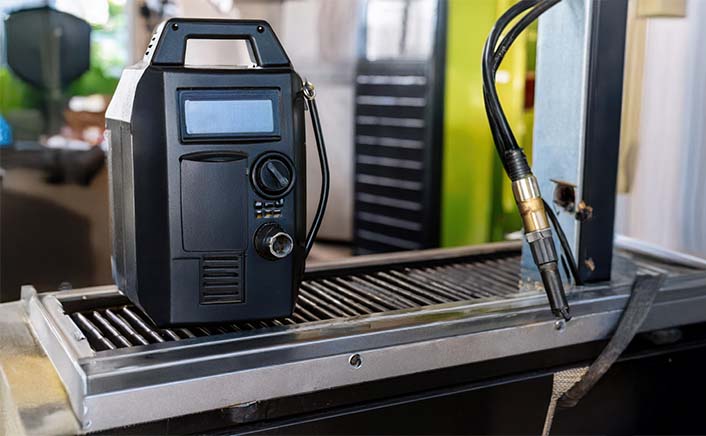
Battery-based PDUs, while smaller in market size at USD 87 million in 2021, show considerable growth potential, projected to reach USD 139 million by 2025. Their increasing adoption reflects a broader trend toward sustainable, low-emission, and quiet portable power solutions, particularly in data centers, healthcare facilities, field hospitals, and urban infrastructure projects where noise and emissions from generators may pose restrictions. Advances in battery technology, including lithium-ion and hybrid storage systems, are providing higher capacities, longer run times, and faster deployments, making them increasingly relevant for mission-critical applications. Data centers, one of the primary applications for PDUs in North America, are increasingly integrating battery-based units to ensure uninterruptible power and seamless transitions between grid outages and backup generation, thus minimizing risks associated with data loss or service disruptions.
Grid-tied PDUs, valued at USD 267 million in 2021 and expected to reach USD 393 million by 2025, also play a significant role in market growth. Typically deployed in semi-permanent or temporary setups connected to existing electrical infrastructures, these systems provide scalable power distribution for industrial plants, commercial sites, construction areas, and emergency operations. The modularity and flexibility of grid-tied PDUs allow them to adapt to rapidly changing power loads, making them ideal for evolving construction sites, telecommunications installations, and temporary events. Their adoption is further supported by urban infrastructure expansion throughout North and South America, including smart city initiatives and utility modernization projects.
Several macro drivers are propelling the adoption of PDUs in the region. For one, notable industrial growth in North America and Latin America especially in sectors such as construction, oil and gas, mining, and manufacturing creates a demand for reliable portable power distribution systems capable of managing high-load equipment in remote or temporary locations. The increasing complexity and automation of industrial processes require PDUs with integrated monitoring, surge protection, and load management features for safety and operational efficiency
Additionally, the growth of data centers and IT infrastructure across the U.S., Canada, and Brazil is a significant factor. These facilities demand intelligent, scalable, and portable PDUs to manage high-density server loads, maintain uptime, and support edge computing initiatives. The rise of AI, cloud computing, and IoT applications has further intensified the demand for modular PDUs with features such as real-time monitoring, remote management, and integration with uninterruptible power supplies (UPS).
Emergency response and defense applications are also key drivers for the Portable Power Solution Market in North and South America. Regular deployments of portable PDUs in the U.S., Canada, and various Latin American countries highlight their critical role in disaster response, field hospitals, and military operations. The increasing frequency of natural disasters, including hurricanes, wildfires, floods, and seismic events, underscores the urgent need for rapidly deployable, rugged PDUs capable of supporting communications, medical facilities, command centers, and temporary shelters. Military operations are increasingly leveraging generator-linked and hybrid battery PDUs to support expeditionary energy strategies and mobile tactical networks where conventional grid power is often unavailable or unreliable.
Moreover, technological advancements continue to influence market growth. There is a growing demand for modular, hybrid, and smart PDUs, reflecting the evolving needs of customers in this dynamic sector.