Asia-Pacific Automated Phlebotomy Robots Market Growth Driven by Healthcare Infrastructure Expansion, Aging Population, and Chronic Disease Prevalence
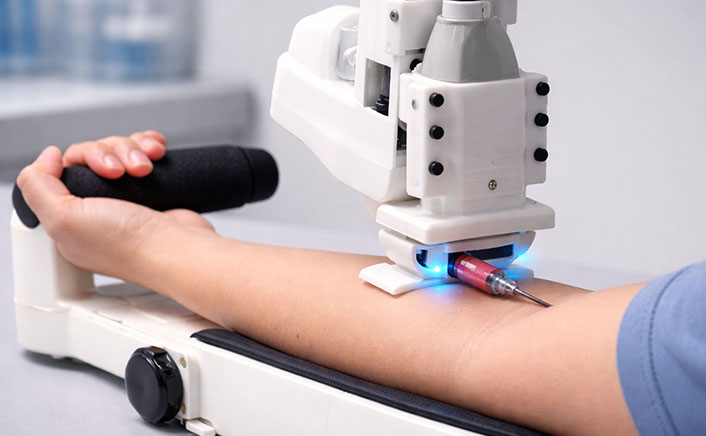
Asia Pacific is the fastest-growing region in the Global Automated Phlebotomy Robots Market due to several structural and economic factors. The region is experiencing rapid expansion in healthcare infrastructure, especially in countries like China, India, and Japan, which is increasing the adoption of advanced medical technologies. Rising healthcare expenditure and strong government initiatives for healthcare modernization further accelerate market growth. Additionally, the large and aging population, along with the increasing prevalence of chronic diseases, is driving demand for efficient diagnostic solutions. Growing awareness of automation benefits and a shortage of skilled healthcare professionals are also encouraging hospitals to adopt robotic phlebotomy systems, leading to the highest CAGR in this region.
Rapid Healthcare Infrastructure Development.
Asia Pacific is witnessing significant expansion in healthcare infrastructure, including hospitals, diagnostic laboratories, and specialized care centers. Countries like China, India, and Southeast Asian nations are investing heavily in improving healthcare accessibility and quality. This rapid development creates a strong foundation for the adoption of advanced medical technologies such as automated phlebotomy robots. Newly built facilities are more inclined to integrate automation from the outset to enhance efficiency and accuracy. Additionally, private healthcare providers are focusing on modernization to remain competitive, further accelerating the deployment of robotic blood collection systems across both urban and semi-urban areas.
Rising Healthcare Expenditure.
Healthcare spending in Asia Pacific has been increasing steadily due to economic growth, rising income levels, and expanding insurance coverage. Governments are allocating larger budgets to strengthen healthcare systems, while private sector investments are also growing rapidly. This increased financial capacity enables hospitals and diagnostic centers to invest in innovative technologies like automated phlebotomy robots. Such systems help reduce operational costs over time by improving efficiency and minimizing human error. As healthcare providers aim to deliver higher-quality services, the willingness to adopt advanced automation solutions continues to grow, making expenditure a key driver of market expansion.
Large and Aging Population Base.
Asia Pacific is home to a large and rapidly aging population, particularly in countries like Japan, China, and South Korea. An aging population typically requires more frequent medical attention, including regular blood testing for disease monitoring and preventive care. This significantly increases the volume of diagnostic procedures, placing pressure on healthcare systems. Automated phlebotomy robots help manage this growing demand by improving efficiency, reducing waiting times, and ensuring consistent accuracy. Additionally, elderly patients often require more delicate handling, and robotic systems can enhance patient comfort and safety, making them increasingly valuable in geriatric care settings.
Increasing Prevalence of Chronic Diseases.
The rising incidence of chronic diseases such as diabetes, cardiovascular disorders, and cancer is a major driver in the Asia Pacific region. These conditions require continuous monitoring through frequent blood tests, leading to a surge in diagnostic workloads. Healthcare providers are increasingly turning to automation to handle this growing demand efficiently. Automated phlebotomy robots offer precise vein detection, reduced risk of errors, and improved patient experience. As lifestyle changes, urbanization, and aging populations contribute to higher disease prevalence, the need for reliable and scalable diagnostic solutions continues to grow, thereby boosting the adoption of robotic blood collection technologies.
Government Support & Healthcare Modernization Initiatives.
Governments across Asia Pacific are actively promoting healthcare modernization through policies, funding programs, and digital health initiatives. Many countries are investing in smart hospitals, artificial intelligence, and robotic technologies to improve healthcare delivery. These initiatives encourage the adoption of automated solutions, including phlebotomy robots, to enhance efficiency and reduce dependency on manual processes. In addition, regulatory support and public-private partnerships are helping accelerate the integration of advanced medical devices. As governments focus on improving healthcare outcomes and accessibility, their support plays a crucial role in driving the growth of automated phlebotomy technologies in the region.
Competitive Landscape
Some of the major companies operating within the Global Automated Phlebotomy Robots Market are: Veebot Systems Inc., Vitestro, Becton, Dickinson and Company (BD), Siemens Healthineers, Intuitive Surgical and Others.