The Electronics Engine: How Semiconductors and Displays Consume 98% of Asia's Nitrogen Trifluoride
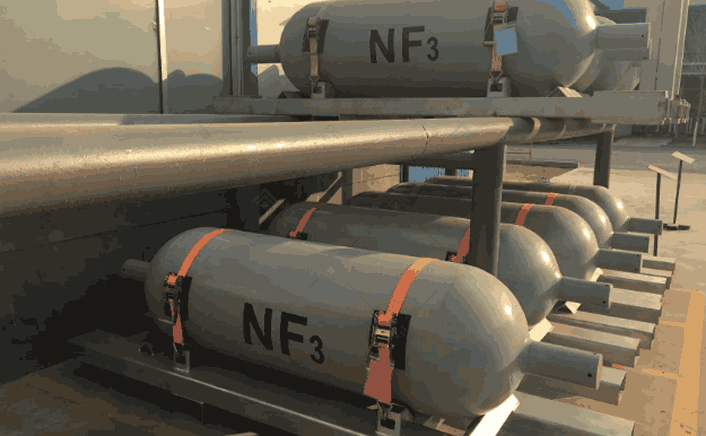
The application segmentation of the Asia Nitrogen Trifluoride (NF3) Market is characterized by a significant reliance on a single, dominant industrial sector: electronics manufacturing.
The combined proportions of the Semiconductor Industry (approximately 55-65%) and Flat Panel Display (FPD) Manufacturing (around 30-40%) indicate that approximately 85-98% of all NF3 produced in Asia is utilized in the fabrication of chips and screens. This high concentration represents a critical structural feature of the market, making it a direct and leveraged proxy for the health and technological trends of the global electronics supply chain.
The Semiconductor Industry is not only the largest segment but also the qualitative leader, setting the pace for innovation in NF3 production. Its demand is propelled by the continual advancement outlined by Moore's Law, where each transition to smaller semiconductor process nodes (e.g., from 5nm to 3nm) escalates the frequency and precision required for chamber cleaning, thereby increasing NF3 consumption per wafer. This dynamic creates a robust growth engine that transcends simple increases in wafer output, embedding NF? demand into the value of the most advanced technologies. Consequently, this segment commands the highest prices for ultra-high-purity grades and fosters close technical partnerships between gas suppliers and foundry engineers.
In contrast, the FPD Manufacturing segment provides a stable, volume-oriented demand pillar. Although it is less dynamically innovative than cutting-edge semiconductor fabrication, the scale of panel production especially in China, which leads global LCD output utilizes significant quantities of NF3. This segment's evolution is characterized by generational growth in panel technology (transitioning to larger Gen 10.5+ fabs) and a shift from LCD to more complex OLED production, both of which sustain and gradually increase NF3 usage. Additionally, this segment ensures high capacity utilization for producers, even during semiconductor downturns, although its competitive nature imposes considerable cost pressure and fosters a focus on operational efficiency among NF? suppliers.
The remaining market segments collectively constitute a minimal share, yet they define the market's boundaries and potential avenues for growth. The Solar Photovoltaic (PV) application serves as a cautionary example of technological dependency; its success is linked to thin-film solar technology, which has not yet achieved mainstream acceptance. Its small and fluctuating share underscores the market's limited diversification beyond electronics. Meanwhile, the Chemical Synthesis segment, though small, is notable for representing the highest-margin application, where NF3 is valued for its specific chemical properties rather than its bulk cleaning utility. This segment suggests a potential long-term strategy for suppliers: developing specialized, high-value product lines to mitigate exposure to the volatile electronics cycle. While niche uses, such as High-Energy Lasers, remain commercially insignificant, they highlight the unique properties of NF3.
Ultimately, the segmentation shapes a clear strategic landscape for the Asia Nitrogen Trifluoride market. Its growth, profitability, and risk profile are predominantly influenced by the capital investment cycles of semiconductor and display manufacturing. The market's future is expected to lean less toward discovering new applications and more toward enhancing integration into existing ones improving purity for next-generation chips, ensuring supply security for mega-fabs, and innovating to minimize environmental impact. This extreme concentration offers the advantages of predictable, large-scale demand while creating significant systemic risk, closely linking the fortunes of NF3 producers to the cyclical and capital-intensive nature of high-tech manufacturing. Success in this domain necessitates not only chemical expertise but also a nuanced understanding of global electronics trends and the agility to align production with the specific technical requirements of the world's most advanced factories.