Microfluidics Market in Asia-Pacific Surges: The Role of Cost-Effective Diagnostics in Emerging Healthcare Systems
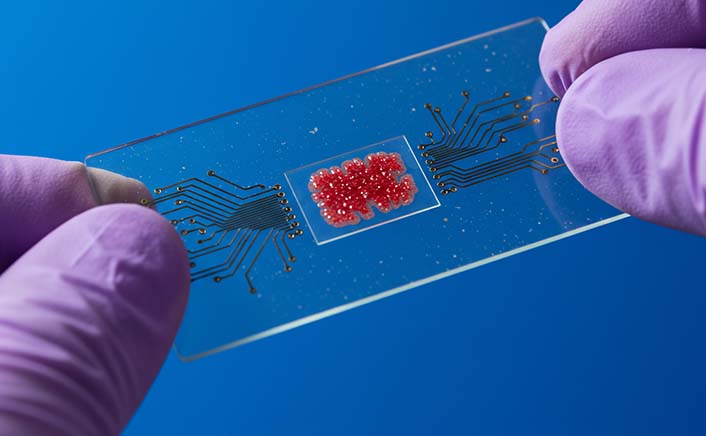
The Asia-Pacific region is the fastest-growing market for microfluidics, fueled by rapid advancements in healthcare and biotechnology in countries such as China, India, and Japan. One of the key factors driving this growth is the increasing adoption of microfluidic technologies in diagnostics, particularly point-of-care testing. These devices provide portable and cost-effective solutions that are essential in emerging healthcare markets.
The Asia Pacific Microfluidics market was valued at USD 6.90 Billion in 2025 and is projected to reach USD 17.45 Billion by 2033, with a compound annual growth rate (CAGR) of 17.40% from 2027 to 2033.
Moreover, the region is seeing significant investments in biotechnology research, focusing on innovative applications like drug delivery and personalized medicine. The growing population, rising healthcare needs, and an expanding middle class in Asia-Pacific are increasing the demand for advanced medical technologies.
Governments in the region are making substantial investments in research and development to promote innovation, while both local startups and established companies are increasingly integrating microfluidics into their products. These dynamics position Asia-Pacific as a hotspot for market expansion, likely to outpace other regions in terms of growth rate.
The growing population and the increasing prevalence of chronic diseases are driving a higher need for advanced diagnostic solutions in the region.
The Asia-Pacific region is experiencing a significant increase in healthcare needs due to a rapidly growing population and a rise in chronic diseases, such as diabetes, heart disease, and cancer. This growing disease burden is driving demand for more efficient and accessible diagnostic technologies. Microfluidic devices, known for providing fast, accurate, and cost-effective diagnostic solutions, are well-positioned to meet this need. As healthcare becomes a higher priority across countries in the region, particularly in India and China, microfluidic technologies present an ideal solution for early disease detection and monitoring, which is essential for managing chronic conditions.
Significant government spending on healthcare infrastructure and biotech research is accelerating the adoption of microfluidics technologies.
Governments in the Asia-Pacific region are increasingly investing in healthcare and biotechnology, highlighting the significance of technological innovation in enhancing public health. Countries like China and India have initiated programs to promote the development, research, and local production of medical devices. These investments are not only improving healthcare infrastructure but also fostering an environment that supports the adoption of microfluidic technology. With funding being directed towards clinical trials, drug discovery, and medical research, an emerging market for microfluidics-based solutions is developing, particularly in diagnostics, drug delivery, and personalized medicine.
The rapid development of the biotechnology sector in Asia-Pacific is fostering the integration of microfluidics in various research and medical applications.
The rapid growth of the biotechnology sector in the Asia-Pacific region is a key factor driving the microfluidics market. Countries such as China, India, and South Korea are emerging as significant players in biotechnology research, focusing on the development of new drugs, vaccines, and diagnostic tools. Microfluidic technologies are essential to these efforts, as they facilitate high-throughput screening, drug testing, and gene analysis in a compact format. As the biotechnology sector continues to expand, the adoption of microfluidics is increasing due to their precision and efficiency, making them integral to the region's research and development initiatives.
The increasing demand for portable, cost-effective diagnostic devices is boosting the adoption of microfluidics in point-of-care testing.
Point-of-care testing (POCT) is a rapidly growing sector within the healthcare industry, driven by the need for quick and accurate diagnostic results in various settings, including hospitals, clinics, and even at home. Microfluidic devices are well-suited for POCT due to their small size, low cost, and ability to integrate multiple testing processes into a single platform. These devices provide significant benefits in terms of accessibility, particularly in rural or underserved areas where traditional lab-based testing may not be available. The increasing adoption of POCT in the Asia-Pacific region, driven by its efficiency and portability, is contributing to the growth of microfluidics, especially in areas such as infectious disease testing and prenatal care.
Innovations in microfluidic device design and efficiency are contributing to the region's rapid market growth.
Technological advancements in microfluidics are significantly driving market growth in the Asia-Pacific region. Continuous innovations in materials, fabrication techniques, and miniaturization are enhancing the efficiency, cost-effectiveness, and versatility of microfluidic devices. Developments such as the integration of digital technologies, automated testing, and improved precision in fluid control are broadening the range of applications for these devices. These enhancements make microfluidics increasingly appealing to researchers, clinicians, and companies in the healthcare and biotechnology sectors. Consequently, Asia-Pacific is emerging as a hub for microfluidics innovation, with countries like Japan, South Korea, and Singapore at the forefront of developing and adopting these technologies.
Competitive Landscape
Some of the major companies operating within the Microfluidics market are: Danaher Corporation, Thermo Fisher Scientific, PerkinElmer, Agilent Technologies, Bio-Rad Laboratories, Illumina, Inc., F. Hoffmann-La Roche, Fluidigm Corporation, Qiagen, Abbott Laboratories, Biomerieux, Dolomite Microfluidics and Others.