Rising Food Demand and Agri-Tech Innovation Fuel Asia Pacific Dominance in Precision Agriculture Market.
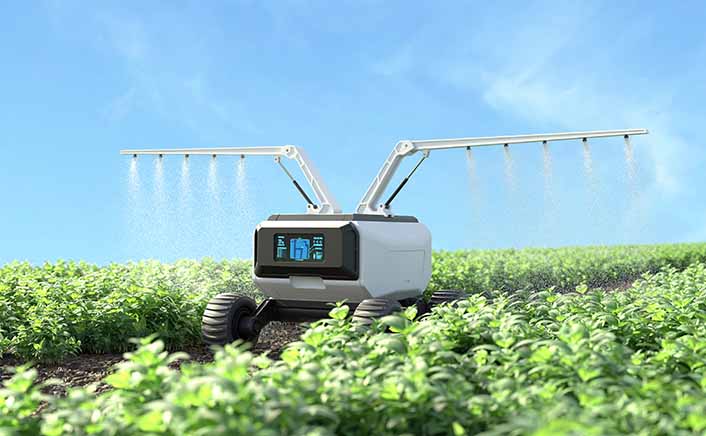
The Asia-Pacific Precision Agriculture Market was valued at USD 2.72 Billion in 2025 and is projected to reach USD 4.74 Billion by 2033, with growth of 20.40% from 2027 to 2033.
Asia Pacific (APAC) is emerging as the fastest-growing region in the Global Precision Agriculture Market, driven by rapid agricultural modernization and strong government support. The region benefits from large agricultural economies such as China, India, Japan, and Australia, where increasing population pressure is pushing the need for higher crop productivity and efficient resource utilization.
One of the key growth drivers is the rapid adoption of advanced farming technologies, including IoT-based sensors, GPS/GNSS systems, drones, AI analytics, and variable rate technology. These solutions help farmers improve yield accuracy, reduce input costs, and optimize irrigation and fertilization practices. Governments across APAC are actively promoting digital agriculture through subsidies, smart farming initiatives, and national digital agriculture missions.
Another important factor is the large base of small and medium farms, especially in India and Southeast Asia, which are increasingly adopting affordable precision farming tools to improve productivity. Countries like China are also investing heavily in smart agriculture infrastructure, accelerating regional expansion.
Additionally, rising concerns over food security, climate variability, and water scarcity are pushing farmers toward data-driven and sustainable farming practices. Combined with expanding agri-tech startups and increasing investments in rural connectivity, these factors make Asia Pacific the most dynamic and fastest-growing region in the global precision agriculture market.
1. Government Support and Subsidies Across Countries Like India, China, and Australia Are Accelerating the Adoption of Smart Farming Technologies in the Region.
Governments across Asia Pacific are playing a crucial role in accelerating the adoption of precision agriculture by offering financial incentives, subsidies, and policy support. Countries such as India, China, Japan, and Australia are actively investing in smart agriculture programs to improve farm productivity and ensure food security. Initiatives like digital agriculture missions, rural development schemes, and technology grants are encouraging farmers to adopt modern tools such as GPS-enabled equipment, IoT sensors, and automated irrigation systems. These policies reduce the initial cost burden for farmers, especially small and medium-scale landholders, making advanced technologies more accessible. Additionally, governments are collaborating with private companies and research institutions to promote innovation in agri-tech solutions. This strong institutional support is significantly boosting the deployment of precision farming practices, thereby driving market growth across the Asia Pacific region.
2. Rising Food Demand Due to Population Growth Is Pushing Farmers to Adopt Precision Agriculture to Maximize Crop Yield and Efficiency.
The Asia Pacific region is home to a large and rapidly growing population, particularly in countries like India and China, which is significantly increasing the demand for food production. This rising pressure on the agricultural sector is pushing farmers to enhance productivity using precision agriculture techniques. Traditional farming methods are often insufficient to meet future food requirements, leading to greater adoption of data-driven farming practices. Precision agriculture enables farmers to monitor soil health, optimize irrigation, and apply fertilizers more efficiently, resulting in higher yields from limited land resources. As urbanization expands, agricultural land is shrinking, further intensifying the need for productivity improvements. Therefore, precision farming technologies are becoming essential to ensure food security and sustainable agricultural output in the region.
3. Increasing Adoption of Advanced Technologies Such as IoT Sensors, GPS, Drones, and AI Is Improving Farm Monitoring and Decision-Making Accuracy.
The rapid integration of advanced technologies such as IoT, GPS, drones, artificial intelligence, and machine learning is transforming the agricultural landscape in Asia Pacific. These technologies enable real-time monitoring of crop conditions, soil moisture levels, weather patterns, and pest activity, allowing farmers to make more accurate and timely decisions. GPS-guided machinery and automated systems improve planting, harvesting, and irrigation efficiency while reducing resource wastage. Drones are increasingly used for crop surveillance and field mapping, enhancing precision in large-scale farming operations. AI-based analytics help in predicting yields and optimizing input usage, which improves profitability. As technology costs continue to decline and digital infrastructure improves, even small farmers are beginning to adopt these solutions, significantly driving the growth of the precision agriculture market in the region.
4. Growing Water Scarcity and Climate Variability Are Driving the Need for Resource-Efficient and Data-Driven Farming Practices in Asia Pacific.
Water scarcity and unpredictable climate conditions are major challenges affecting agriculture across Asia Pacific. Irregular rainfall, droughts, floods, and rising temperatures are impacting crop productivity and increasing risks for farmers. Precision agriculture offers effective solutions by enabling efficient water management through smart irrigation systems that deliver the right amount of water at the right time. Technologies such as soil moisture sensors and weather forecasting tools help farmers respond proactively to changing environmental conditions. This reduces water wastage and ensures optimal crop growth even in challenging climates. Additionally, climate variability has increased the need for resilient farming practices that can adapt to environmental changes. As a result, farmers are increasingly adopting precision agriculture techniques to mitigate risks and ensure stable agricultural output in the region.
5. Expansion of Agri-Tech Startups and Digital Infrastructure Is Making Precision Farming Solutions More Accessible and Affordable for Small and Medium Farmers.
The rapid growth of agri-tech startups and improvements in digital infrastructure are significantly contributing to the expansion of precision agriculture in Asia Pacific. Startups are developing innovative, cost-effective solutions such as mobile-based farm management apps, AI-driven crop advisory systems, and remote sensing technologies tailored for small and medium farmers. At the same time, expanding internet connectivity, smartphone penetration, and cloud computing capabilities are enabling wider access to these technologies in rural areas. Governments and private investors are also supporting the agri-tech ecosystem through funding and incubation programs. This growing digital ecosystem is making precision farming solutions more affordable, scalable, and user-friendly. As a result, farmers are increasingly able to adopt data-driven decision-making tools, which is accelerating the overall market growth in the region.
Competitive Landscape
Some of the major companies operating within the Global Precision Agriculture Market are: AGCO Corporation, CNH Industrial N.V., Deere & Company, Trimble Inc., Kubota Corporation, Ag Leader Technology, TeeJet Technologies, DJI Agriculture, Hexagon AB, Topcon Positioning Systems, Inc. and Others.