Asia-Pacific Humidity Sensor Market to Reach USD 1.26 Billion by 2033, Growing at a CAGR of 10.7%
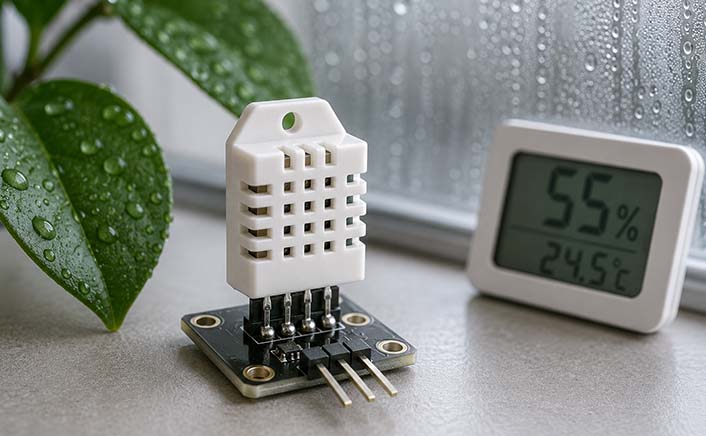
The Asia-Pacific Humidity Sensor Market is entering a new phase of growth as rapid industrial digitalization, semiconductor manufacturing expansion, and increasing deployment of smart monitoring systems strengthen demand for precision environmental sensing technologies. The market was valued at USD 0.56 billion in 2025 and is projected to reach USD 1.26 billion by 2033, registering a CAGR of 10.7% during 2026–2033.
Humidity sensors have become essential components across consumer electronics, industrial automation, HVAC systems, automotive electronics, healthcare equipment, and semiconductor manufacturing. Their ability to provide accurate environmental monitoring supports improved manufacturing quality, equipment reliability, energy efficiency, and regulatory compliance across a wide range of industries.
The Asia-Pacific region continues to dominate both the production and consumption of humidity sensors due to its well-established electronics manufacturing ecosystem. China, Japan, South Korea, Taiwan, and India are investing heavily in semiconductor fabrication, advanced manufacturing, and smart factory initiatives, creating sustained demand for high-performance MEMS-based humidity sensors. The expansion of electric vehicle manufacturing, commercial HVAC installations, data centers, and intelligent building infrastructure is further strengthening market growth.
Consumer electronics remain the largest application segment, supported by large-scale production of smartphones, wearable devices, smart appliances, and connected home products. At the same time, industrial automation is emerging as the fastest-growing application, with manufacturers increasingly deploying real-time environmental monitoring to improve production efficiency, predictive maintenance, and product quality. Semiconductor fabrication facilities also represent a rapidly expanding opportunity in which precise humidity control is essential for cleanroom operations and process stability.
Technology innovation is reshaping the competitive landscape. Manufacturers are introducing digital humidity sensors with improved accuracy, lower power consumption, compact MEMS architectures, and integrated temperature sensing capabilities. The growing adoption of wireless IoT devices and intelligent building management systems is also accelerating demand for connected environmental sensing solutions that support cloud-based monitoring and industrial analytics.
Despite strong growth prospects, the industry continues to face pricing pressure resulting from intense competition and ongoing reductions in average selling prices. Manufacturers are responding by investing in advanced MEMS fabrication technologies, application-specific product development, and localized manufacturing to improve operational efficiency and strengthen supply chain resilience.
Leading companies operating in the market include Honeywell International, Sensirion, Bosch Sensortec, TE Connectivity, TDK Corporation, and Omron Corporation. Competition is increasingly centered on sensor accuracy, miniaturization, digital connectivity, and long-term partnerships with electronics manufacturers, automotive suppliers, and industrial automation providers.
As governments across Asia-Pacific continue to support semiconductor self-sufficiency, industrial modernization, and smart infrastructure development, humidity-sensing technologies are expected to play an increasingly important role in enabling intelligent manufacturing and connected industrial ecosystems. Continued investment in MEMS innovation, wireless sensing platforms, and integrated environmental monitoring solutions is expected to sustain long-term market expansion through 2033.