Rising Demand for High-Clarity Optics and Expanding Solar and Electronics Applications Drive Global Anti-Reflective Coatings Market Growth.
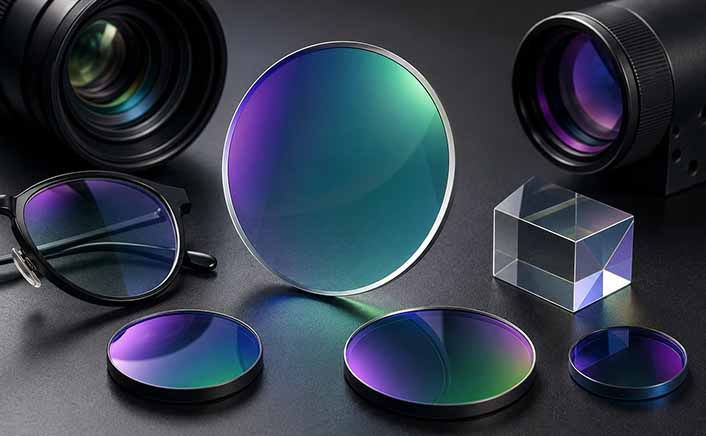
The Global Anti-Reflective Coatings Market is set to experience steady growth as rising demand for high-clarity optical components, increasing adoption of anti-glare surfaces across consumer electronics, and growing deployment of anti-reflective layers in solar photovoltaic modules drive demand across eyewear, display, automotive, and industrial settings worldwide. According to the latest market analysis, the market is projected to grow from USD 6.22 Billion in 2025 to USD 12.55 Billion by 2033, registering a compound annual growth rate (CAGR) of 9.09% during the forecast period.
As manufacturers and end users increasingly prioritize enhanced light transmission and glare reduction, anti-reflective coatings have become a vital technology encompassing single-layer, multi-layer, nanostructured, hydrophobic and oleophobic, and conductive formulations that address consumer electronics, automotive, solar energy, healthcare, aerospace and defense, telecommunications, and industrial manufacturing applications. The growing integration of thin-film deposition technologies into everyday optical and display manufacturing is further reinforcing the role of anti-reflective coatings in modern, high-performance products.
The market is witnessing momentum through innovation in vacuum deposition and sputtering technologies, expanding use of nanostructured and moth-eye coating techniques, and rising collaborations between coating manufacturers, electronics companies, and solar technology providers that accelerate product development and adoption across developed and emerging markets.
One of the primary factors driving market expansion is the increasing adoption of Multi-Layer Anti-Reflective Coatings, the leading Product Type segment with a major share of 39.50% in 2025, supported by superior light transmission and widespread use across ophthalmic lenses, displays, and precision optical instruments. Single-Layer Anti-Reflective Coatings follow with 22.80% share, driven by cost-effective use in basic eyewear and low-cost displays, while Hydrophobic & Oleophobic Anti-Reflective Coatings hold 12.60%, Nanostructured (Moth-Eye) Anti-Reflective Coatings hold 10.80%, Conductive Anti-Reflective Coatings hold 8.10%, and Others contribute 6.20%.
Despite its strong growth outlook, the industry faces challenges. The high cost of advanced coating materials and multi-layer deposition processes, raw material price volatility, and the technical complexity involved in achieving durability and broad-spectrum performance limit adoption among cost-sensitive and early-stage market participants, particularly where advanced thin-film manufacturing infrastructure remains underdeveloped. Stringent performance and durability requirements for precision optical applications add a further layer of complexity for smaller companies.
APAC continues to dominate the Global Anti-Reflective Coatings Market, accounting for 41.80% share in 2025, owing to expanding electronics and semiconductor manufacturing, rising eyewear consumption, and growing solar panel installations. North America holds 26.20% share, supported by strong demand from the aerospace, defense, and automotive sectors, while Europe holds 22.40%, benefiting from robust automotive manufacturing and growing solar energy investments. Latin America and the Middle East & Africa are gradually strengthening their positions.
Competitive Landscape
Some of the major companies operating within the Global Anti-Reflective Coatings Market are DuPont, PPG Industries, Inc., ZEISS International, EssilorLuxottica, Honeywell International Inc., AGC Inc., Applied Materials, Inc., Materion Corporation, and others.