How CULs Are Powering Productivity Across Construction and Agriculture
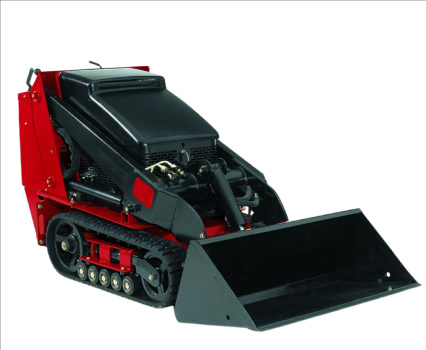
The compact utility loaders market, with revenue of 147,678 units in 2024, is expanding rapidly in the lightweight utility loader (CUL) sector. A thorough analysis indicates that this dynamic industry is expected to grow at a compound annual growth rate (CAGR) of 3.0% over the forecast period, reaching a projection of 184,896 units by 2032. Due to their ability to enhance output and operational efficiency, these robust and adaptable machines are quickly becoming indispensable in the fields of agriculture, landscaping, and construction. This blog dives into the report's main findings, examining the factors, uses, and prospects that are influencing this booming market.
Market Overview and Growth Trajectory
The remarkable increase from 147,678 to almost 185,000 units highlights the growing appreciation of the value of compact utility loaders on a global scale. The market is stable and healthy, driven by real demand rather than ephemeral trends, as evidenced by the steady 3.0% CAGR. The CUL's exceptional capacity to carry out numerous tasks on a single platform, eliminating the need for multiple single-function machines and thereby saving labor costs, is driving this growth. The market's adaptability and resilience are closely linked, and they play crucial roles in everything from managing modest residential properties to large-scale commercial projects.
Drivers Fueling the Market Expansion
Several important factors are driving the demand for portable utility loaders.
• The Rise of Sustainable Construction: The need for machinery that can function effectively in small areas has increased due to global shifts, such as population densification. CULs are perfect for urban infill projects, backyard construction, and interior demolition where larger machinery is impractical.
• Resolving Labor Shortages: Businesses are being compelled to invest in equipment that enhances productivity due to a persistent shortage of skilled labor in industries such as landscaping and construction. By acting as an effect multiplier, a CUL enables one operator to complete tasks that would typically call for a crew.
• Technological Developments: Contemporary CULs feature more ergonomic operator interfaces, improved attachment compatibility, and enhanced hydraulics. These developments attract a broader user base by making them safer, more effective, and easier to use.
• Unmatched Versatility: A CUL's versatility is its primary value. It is a multipurpose investment that maximizes its return on investment for owners due to its versatility, which allows for quick switching between a digging machine, trencher, grapple, and breaker.
Diverse Service Segments and Industry Applications
The market's vitality is reflected in its diverse service segments and wide-ranging applications:
Rental Services: This segment is a major contributor to market volume. The rental model offers contractors and homeowners flexible access to advanced equipment for specific, short-term projects, eliminating the capital outlay associated with ownership.
Product Sales (Ownership): For businesses that rely on CULs for daily operations, ownership is the more economical choice. This includes landscaping companies, construction firms, agricultural operations, and municipal governments.
The industry applications for compact utility loaders are extensive:
• Construction: Site cleanup, digging foundations for small additions, lifting materials, and interior demolition.
• Grading land, relocating soil and mulch, planting trees, and excavating irrigation trenches are all examples of landscaping.
• Agriculture: Barn cleanup, handling feed, and light grading tasks on small-scale farms.
• Municipalities: Park maintenance, clearing snow from sidewalks, and repairing public spaces with minimal disruption.
Consumer Insights and Challenges
Practical buyers who value adapter versatility, machine robustness, and a definite return on investment—such as entrepreneurs, landscaping professionals, farmers, and municipal managers—are the main users of compact utility loaders. Notwithstanding the optimistic outlook, the market still faces obstacles, such as the high upfront costs associated with a new CUL and its accessories, as well as its susceptibility to economic downturns that could impact key sectors like construction. Additionally, the industry continues to prioritize ensuring the safety and training of operators.
Future Outlook and Opportunities
The market for compact utility machines is projected to reach 184,896 units by 2032, presenting numerous opportunities for innovation.
• Electrification: The increasing need for low-emission, sustainable equipment, particularly for indoor use and in environmentally conscious areas, can be met by creating electric and hybrid CULs.
• Smart Technology Integration: Fleet directors may obtain important information about machine usage, maintenance requirements, and operational efficiency by integrating telematics, GPS, and Internet of Things sensors.
• Increasing Attachment Ecosystems: By consistently developing the selection of compatible attachments, the system's flexibility will be increased, opening up new markets and application areas.
• Emphasis on Emerging Markets: There is a great chance to introduce CULs as necessary devices as construction of infrastructure picks up rapidly in nations that are developing.