The Race to Diagnose Parkinson's Before Symptoms Appear
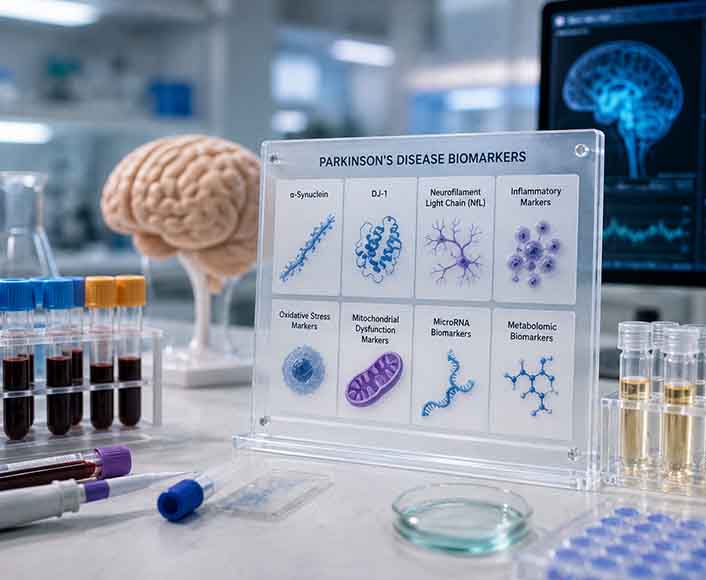
When Parkinson's is diagnosed through visible tremors and other symptoms, the disease has usually been silently harming neurons for years. The delay between disease onset and detection is the main issue that the Parkinson's Disease Biomarkers Market aims to address. Understanding how researchers are bridging this gap reveals much about the future directions of neurological medicine.
The Diagnostic Blind Spot
Traditional Parkinson's diagnosis depends on clinical symptoms like tremor, rigidity, and slowed movement, which usually appear only after substantial neurological damage has already taken place. This reactive approach to a progressive disease underscores the importance of biomarker research. Biomarkers are measurable biological indicators, identified through blood tests, cerebrospinal fluid analysis, genetic testing, or neuroimaging, that can detect the presence and progression of the disease earlier and more objectively than relying solely on observing symptoms.
This research addresses a concrete challenge: as the global population ages, Parkinson's disease becomes more common, prompting healthcare systems to seek diagnostic tools that detect the condition early before permanent neurological damage occurs.
The Clues Researchers Are Chasing
Not all biomarkers target the same signal, so it's important to recognize this before assuming any single method will "solve" Parkinson's diagnosis.
Alpha-synuclein biomarkers are currently the most prominent, attracting the most research and clinical focus due to their close link with the protein pathology of Parkinson's disease. The second largest group includes dopamine-related biomarkers, which monitor the dysfunction of dopaminergic neurons responsible for the disease's motor symptoms. Additionally, genetic biomarkers are increasingly important as personalized medicine advances, enabling the identification of at-risk individuals based on inherited risk factors rather than waiting for symptoms to manifest.
Neurofilament Light Chain (NfL) has become a valuable marker for differentiating Parkinson's disease from other neurodegenerative disorders that have similar symptoms. This addresses a significant clinical challenge, as misdiagnosis in movement disorders is common. Additionally, inflammatory and protein aggregation biomarkers are gaining attention, highlighting increased research focus on neuroinflammation not only as a consequence but also as a possible contributing factor.
Where the Sample Comes From Matters as Much as What It Measures
Cerebrospinal fluid (CSF) continues to be the preferred choice for biomarker research due to its direct link to the central nervous system, providing highly specific disease-related insights that are difficult to replicate with other methods. However, collecting CSF is invasive, which has led to the quick adoption of blood and plasma-based biomarkers. These offer a minimally invasive and more scalable approach, making population-wide screening feasible in ways that CSF testing alone could not accomplish.
This tension between accuracy and practicality is arguably the most crucial dynamic in the field. A highly precise CSF test that requires a lumbar puncture will always encounter adoption challenges that a blood test might not, even if it is slightly less precise. Approaches using saliva and urine are being considered precisely because accessibility often influences actual clinical use more than ideal specificity.
The Technology Making Detection Possible
Immunoassays still dominate the field because they effectively detect protein biomarkers like alpha-synuclein at necessary sensitivity levels. Meanwhile, imaging techniques such as PET, MRI, and dopamine transporter scans offer a complementary perspective by allowing clinicians to see actual neurodegenerative changes in the brain, rather than depending only on molecular signals.
Genomic and proteomic methods, though still a smaller part, suggest the future direction: multi-omics analysis that integrates genetic risk factors, protein signatures, and imaging, rather than relying on a single biomarker type. AI and machine learning are driving this transition forward, quickly identifying patterns across combined datasets more efficiently than manual analysis.
Why Promising Biomarkers Still Aren't in Routine Clinical Use
The reality behind this market's growth stats is that, while many promising biomarkers exist, only a few are used routinely in clinics. The main challenge isn't scientific discovery but standardization. Variations in collection methods, testing platforms, and interpretation criteria across labs lead to results that are often difficult to compare directly.
Clinical validation introduces additional challenges. Many biomarkers have only been evaluated in small patient groups, and regulatory authorities rightly demand extensive, multicenter evidence of reliability before approving diagnostic tests for broad use. This process is slow and costly, which is why biomarker discovery frequently surpasses biomarker adoption in real clinical practice.
Where the Research Money Is Actually Flowing
North America dominates this market due to extensive research funding, state-of-the-art healthcare infrastructure, and a high concentration of biotech and pharmaceutical firms investing in lengthy clinical validation processes. Europe ranks second, with Germany, the UK, France, and Italy engaging in active biomarker research supported by robust partnerships between academia and healthcare institutions.
Asia-Pacific is the fastest-growing region, driven not only by urgent needs but also by expanding infrastructure that improves healthcare access, increased research investment in countries like China, Japan, and South Korea, and a large elderly population generating the demand essential for ongoing clinical investments.
What This Means for the Next Decade of Parkinson's Care
The trend is clear: neurological diagnosis is shifting from reactive symptom matching to proactive, biomarker-driven detection. This same transition has already transformed cancer and cardiovascular treatment. Blood-based testing is expected to become the primary, accessible method, while CSF and imaging will be used for confirmation and detailed disease analysis.
For pharmaceutical companies, diagnostic developers, and healthcare systems monitoring this field, the true opportunity isn't selecting a single winning biomarker, but rather developing standardized protocols and multicenter validation evidence that can turn promising research signals into routine clinical tools today.